
Commercial Window Cleaning Cost: What Shapes a Professional Quote
Commercial window cleaning cost depends on more than the number of panes. A useful quote accounts for the glass, its location, how crews can reach it, its current condition, the service schedule, and whether the work includes the inside, outside, or both. If you manage an office, retail property, clinic, warehouse, or other commercial facility, understanding these factors helps you define a scope that fits the building and compare proposals more clearly.
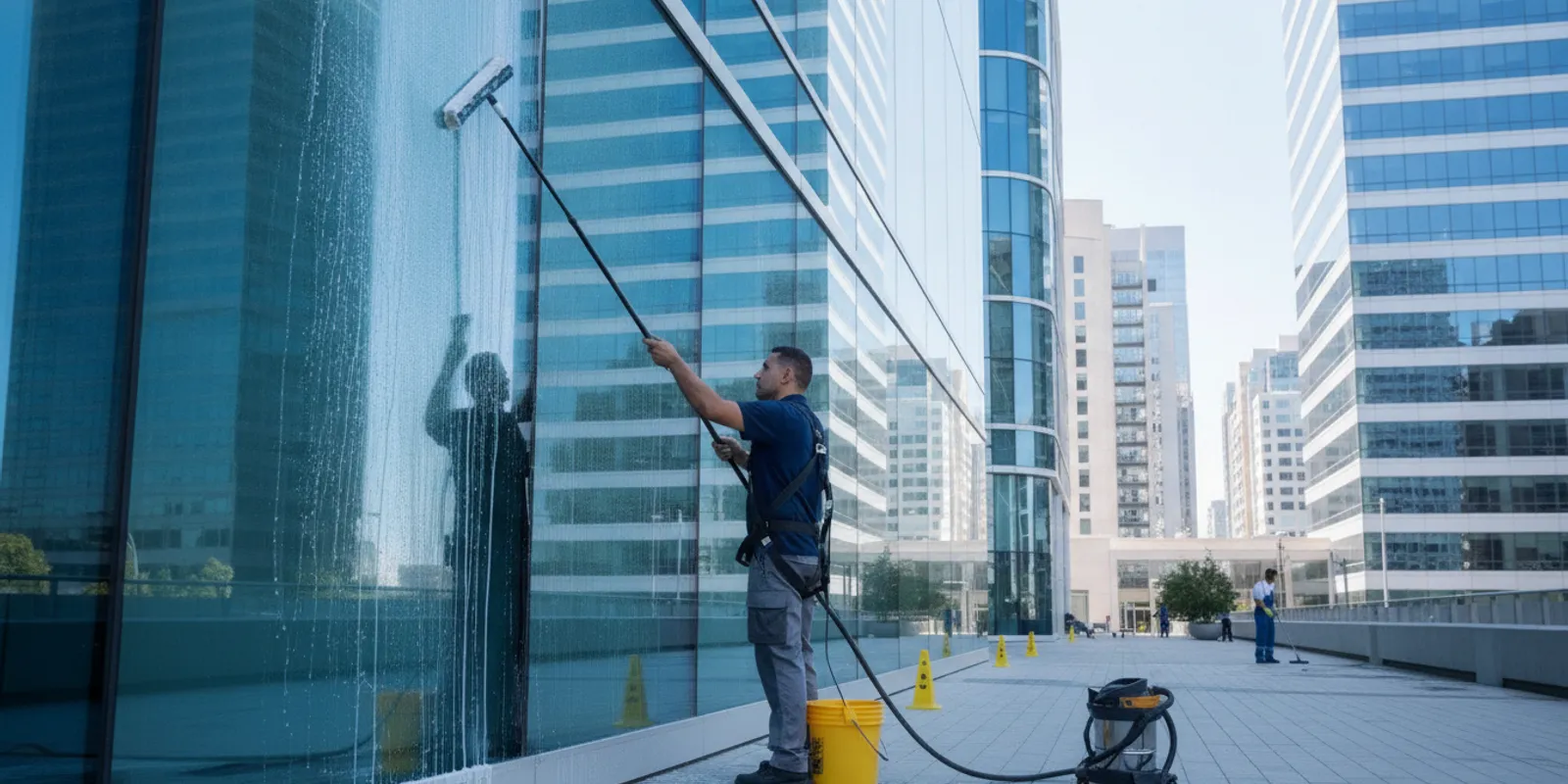
Why can’t one rate describe every commercial building?
Two buildings can have a similar amount of glass and still require different work. One may have ground-level storefront windows that crews can reach from a clear sidewalk. Another may have upper-level glass above landscaping, a loading area, or a sloped entrance. A building may also have interior partitions, delicate finishes, heavy soil, or access restrictions that change how the work should be planned.
A quote is an estimate for a defined job, not simply a price attached to a building type. A professional needs to understand which surfaces are included, the method of access, the condition of the glass, and the expected service interval. If those details are missing, a proposal may leave important areas unclear or make two bids difficult to compare.
That is why a site walkthrough is useful. It lets the property contact and cleaning provider discuss the actual glass and working conditions, rather than making assumptions from a brief description. The walkthrough also gives you a chance to identify access rules, operating hours, sensitive areas, and any tasks that should be excluded.
Janitor Utah provides commercial cleaning for business facilities, with work scoped to the property and requested service. A window-cleaning request should therefore be treated as a specific scope to review, not a published package or a universal rate. You can also review the company’s broader commercial cleaning services to see how window care sits alongside other facility work.
How does the amount of glass affect a quote?
Window count is one of the first details people consider, but a useful count needs a little context. The provider may need to know how many separate windows or glass sections are present, how large they are, whether they are reachable from the floor, and whether the same work is needed on both sides.
A small storefront may have a handful of large panes. An office building may have repeated sections across several floors, plus glass doors, sidelights, lobby walls, or interior conference-room partitions. A facility with long rows of similarly sized windows may be easier to scope than one with many shapes and sizes, even when the rough total glass area appears similar.
During a walkthrough, help identify the boundaries of the work. For example, clarify whether the request includes only exterior windows visible from the property perimeter, or also doors, transoms, glass railings, interior partitions, and glazed walls. These are not automatically included just because they are glass. A provider should confirm what is included in the proposed scope.
Where the building has many repeated windows, a floor-by-floor description or marked plan can help establish coverage. For a smaller property, a walk around the building with a contact person may be enough to identify the main glass areas. Either way, the goal is not to create paperwork for its own sake. It is to make sure the quote reflects the same surfaces that the facility expects to be cleaned.
Which glass areas are easy to overlook?
- Glass entry doors and the narrow panels beside them.
- Interior glass walls in reception areas, conference rooms, or offices.
- High lobby glazing or glass above interior doors.
- Window sections partially hidden by signage, furniture, displays, or equipment.
- Glass facing a courtyard, loading area, or enclosed service space.
- Interior or exterior glass that is included only during certain visits.
Ask the provider to describe the included areas in plain language. If you are comparing proposals, check that each bidder has counted the same faces and types of glass. A lower figure is not an apples-to-apples comparison if it covers fewer windows or only one side.
How do height and access change the work?
Height matters because it can affect the method, equipment, time, and coordination needed to reach the glass. Ground-level windows with clear access present a different task from upper-level windows or glass above a canopy. The building’s height alone does not tell the whole story: the immediate surroundings and the available access points matter too.
During the walkthrough, point out the building’s entrances, sidewalks, landscaping, awnings, ledges, loading zones, and other features close to the glass. A planting bed or fixed feature may prevent a crew from standing close to a window. A canopy can make a pane awkward to reach. A busy driveway may need to remain open during the work. These conditions can change the sequence or access plan.
Do not assume that a particular access method is included just because glass is visible from the ground. The provider should inspect the work area and explain what access approach is appropriate for the job. If special equipment, building coordination, or restrictions may be needed, ask how the proposal accounts for them. The quote should not imply a method that has not been discussed and assessed.
Building management can make the assessment more useful by sharing relevant access rules before the visit. For example, explain whether crews need to check in, use a service entrance, coordinate with security, avoid certain hours, or stay clear of active deliveries. If the building requires advance notice or escorts, include that in the conversation. Scheduling and access requirements are part of planning a workable scope.
What access details should you share?
- Whether the work is limited to accessible ground-level glass or includes elevated areas.
- Where crews may park, load equipment, and enter the facility.
- Any restricted zones, security procedures, or escort requirements.
- Hours when entrances, sidewalks, or loading areas are busiest.
- Landscaping, signs, canopies, or other obstacles near the windows.
- Known limits on equipment, noise, water use, or work around occupants.
If access cannot be confirmed at the walkthrough, note the uncertainty and ask how it affects the proposal. It is better to identify an assumption in advance than to discover during service that the planned route or equipment cannot be used as expected.
Does interior or exterior service make a difference?
Yes. A request for outside glass is not the same scope as cleaning both sides of every window. Interior service may involve working around desks, displays, equipment, occupants, and floor finishes. Exterior service may involve weather exposure, landscaping, public walkways, or other access conditions. Each side needs to be defined clearly.
Some facilities need exterior glass addressed more often because it faces a busy street, parking area, or other source of visible soil. Interior glass may have different needs based on fingerprints, visitor traffic, or how the space is used. These are planning considerations, not a formula for a particular facility. The property manager should decide which areas matter most and describe the desired result.
Clarify whether the service includes window frames, sills, tracks, screens, or only the glass surface. Those details should not be treated as automatic additions. A pane may look clean while its frame or sill still has visible dust or debris, so it is helpful to state whether those components are part of the request. Likewise, screens or other removable features may require separate discussion.
In an occupied office, interior work may need to be arranged around meetings or access to rooms. In a retail facility, the entry glass may need attention at a different time from less visible windows. For a clinic or other business with controlled areas, the facility contact should explain entry and work restrictions. A quote can only reflect these practical needs when they are shared.
When comparing proposals, look for explicit wording such as “exterior only,” “interior and exterior,” or a list of included glass areas. If a bid uses broad language such as “all windows,” ask what that means for doors, partitions, frames, and less accessible glass. A short clarification can prevent different expectations after the work is scheduled.
How does glass condition affect the scope?
The starting condition of the glass can affect the work needed to bring it to the requested appearance. Routine fingerprints and ordinary surface soil are different from accumulated residue, paint or construction debris, hard-water marks, adhesive, or other material that may need special consideration. Do not assume every mark can be removed through standard window cleaning, or that every condition is included in a routine visit.
Tell the provider what you know about the glass. If it has not been cleaned recently, has been exposed to nearby work, or has visible deposits, point that out during the walkthrough. If the property has recently undergone construction or renovation, identify which panes were exposed and whether any protective film or temporary material remains. The provider can then assess the visible condition and discuss whether the requested work needs a separate scope.
It is also useful to distinguish between cleaning and restoration. A cleaning request generally concerns removing ordinary soil from a surface. A stain or mark that remains after cleaning may need a different assessment, and some marks may not be removable without risking damage. Ask what result is realistic for the observed condition and how any uncertain areas will be handled. Avoid treating a cleaning quote as a promise to restore damaged or permanently marked glass.
If the glass is in a sensitive or specialized area, share any product or method restrictions provided by the facility. A property manager should not guess what is safe for a particular glass, coating, frame, or adjacent finish. The cleaning provider should be able to consider the information available and clarify any limitations before the work is approved.
Why does cleaning frequency matter?
Frequency changes how the work is planned over time. A one-time visit, a seasonal service, and a recurring schedule are different requests. A quote should state how often the work is expected, which glass is covered on each visit, and whether the scope changes between visits.
A facility may choose a regular schedule for highly visible glass and a less frequent schedule for other areas. Another business may request a one-time service before a tenant handoff, event, or property presentation. There is no single cadence suitable for every building. Consider the appearance standard your organization needs, how the premises are used, and the level of soil the glass tends to collect.
For recurring work, explain whether all included windows should be cleaned every time or whether the scope should rotate. If some glass is serviced only during selected visits, list it separately. This avoids a mismatch between a recurring plan and a later assumption that every pane receives the same attention at every visit.
Also discuss how the schedule fits the building’s operating calendar. A business may prefer work before opening, after closing, or during a quieter period. A property with multiple tenants may need coordination so that entrances and shared spaces remain usable. These preferences do not automatically determine a particular price, but they help define the labor and scheduling requirements of the requested work.
When your needs change, revisit the scope rather than assuming the original quote covers new areas or a different cadence. A new tenant, renovation, landscaping change, or change in building use can affect access and the amount of glass that needs attention. Keep the service description current so that the plan continues to match the property.
What building details should a facility manager prepare?
A short preparation list makes the walkthrough more productive. Share what the property is, where the work is located, which glass areas matter, and what constraints crews should know. You do not need to calculate the job yourself. Clear information gives the provider a better basis for inspecting the site and preparing a scoped quote.
- Facility type and location: Identify the business or property and its location. This helps establish the site being reviewed and whether the requested work is within the service area being discussed.
- Glass areas: Describe the building’s windows, doors, interior glass, and any high or less visible sections you want considered.
- Inside, outside, or both: State which sides are requested and whether any areas should be excluded.
- Access and operating hours: Explain entry procedures, restricted areas, busy periods, and times that may work better for the business.
- Current condition: Point out visible soil, residue, recent construction exposure, or other conditions that should be assessed on site.
- Frequency: Say whether you need a one-time visit or recurring service, and whether the same scope should be completed each time.
- Site contact: Identify who can walk the property, answer questions, and confirm the scope.
- Other facility work: Mention whether you are evaluating window cleaning alone or coordinating it with broader janitorial needs.
If you have plans, a window schedule, or property notes that identify the relevant areas, have them available. They can support the conversation, but a site review remains important when access or surface condition is not obvious from the documents. Do not spend time generating an exact count if you are unsure; mark the areas you want included and let the walkthrough resolve the details.
For recurring commercial janitorial needs beyond glass, the company’s janitorial cleaning service information can help you identify whether you also want to discuss routine building cleaning. Keep the two scopes distinct in the request so the proposal can show what is included in each.
How can you compare commercial window-cleaning proposals?
Do not compare the final figures alone. First check that each proposal covers the same glass, frequency, access conditions, and service boundaries. A proposal that excludes interior glass cannot be compared directly with one that includes both sides. Likewise, one that excludes elevated areas differs from a scope that explicitly assesses them.
Use the following questions to review proposals. If a detail is not written down, ask for clarification before you approve the work.
- Which windows and other glass surfaces are included?
- Does the scope cover interior glass, exterior glass, or both?
- Are frames, sills, tracks, or screens included or excluded?
- How are elevated or obstructed areas handled?
- What assumptions have been made about access, entry, and operating hours?
- Does the scope address the condition observed at the walkthrough?
- Is the work one-time or recurring, and what is the frequency?
- What areas or conditions would require a revised scope?
- Who is the site contact for access and questions on the service date?
A clear proposal should make the boundaries understandable without requiring you to infer what “complete” means. If a phrase could cover several interpretations, ask the provider to spell it out. Keep a copy of the agreed scope so that the property contact and cleaning team are working from the same description.
Also distinguish the window service from any adjacent work. A broad commercial cleaning request might include janitorial tasks, floor care, or other services, but those tasks should be specified rather than assumed to be part of a window-cleaning proposal. Janitor Utah describes a range of commercial offerings; your quote discussion should identify the particular services you want considered.
What can make a walkthrough more useful?
A walkthrough works best when the person who understands the property can participate. That person can point out which glass matters, explain how the business operates, and answer questions about access. If the person preparing the quote and the facility contact see different parts of the building, arrange a route that covers all requested areas.
Begin with the most important sections. For example, identify the main entrance, public-facing glass, lobby, offices, and any upper or hard-to-reach areas. Then note less prominent glass that should be included. This creates a shared picture of the intended coverage and helps the provider avoid relying on an incomplete impression of the property.
Use the visit to discuss both current needs and practical limits. Let the provider know if a space is occupied, if access needs to be arranged with a tenant, or if a business activity should not be interrupted. Explain any work-hour preferences and site procedures. Ask what additional information the provider would need before finalizing a quote.
It is reasonable to ask how the proposal will describe items that could not be assessed during the visit. Maybe access to a room was unavailable, or an exterior area was blocked. Ask whether that part will be excluded, treated as an assumption, or reviewed later. A transparent boundary is more useful than an implied inclusion that neither side has confirmed.
Before the walkthrough ends, repeat the key scope back in simple terms: which areas, which sides, how often, and any special access or condition notes. If the quote is prepared later, this recap gives both parties a reference point for resolving omissions or misunderstandings.
How should you plan service around a working facility?
Window cleaning takes place in and around an active property, so timing and communication matter. Facility managers should consider when entrances are busiest, whether occupants need notice, and which spaces can be made available. A retail entrance, shared lobby, or clinic reception area may need a different plan from an empty office suite.
Decide who will inform occupants or tenants about the scheduled work. If crews need to access interior rooms, identify the person responsible for unlocking them and confirming that the area is ready. For exterior work, clarify where vehicles, deliveries, and pedestrians will move during the service. These are coordination questions for the property team and provider to resolve together.
Weather and site conditions can affect the timing of outdoor work. Ask how the provider handles a change in conditions and whether a rescheduled visit would alter the planned scope. Do not assume a particular cancellation policy or response time unless it is stated in the proposal or agreed in writing.
For a multi-tenant property, a single building contact can help coordinate access and communicate changes. If a tenant has a restricted area or a different operating schedule, share that information in advance. The more complete the site instructions, the less likely the team will arrive without access to an area that was included in the request.
When should you revisit the scope?
A quote reflects the details that were provided and assessed at the time. Revisit it if the building changes in a way that affects the glass, access, or service schedule. Renovation work, a new addition, changed landscaping, altered operating hours, or a new tenant can change the practical conditions for cleaning.
You should also review the scope if your desired outcome changes. Perhaps the business now wants interior partitions included, or the property wants a different schedule for the public-facing windows. A conversation about the revision lets the provider determine whether the existing plan still fits or whether the quote should be updated.
After service, note any areas that were inaccessible or any items that did not match the agreed boundaries. Share that feedback with the provider while the details are clear. If a concern relates to a specific pane or location, describe it precisely rather than saying only that the whole building needs another look. Clear communication supports a practical follow-up discussion.
Keep records of the final scope, schedule, access instructions, and site contact. These details make future planning easier and help a new property manager understand what was agreed. They also make it simpler to identify when a request is genuinely new work rather than an expectation that was already part of the service.
What should you ask before requesting a quote?
Before you contact a provider, make a brief note of the building and your needs. You do not need a perfect inventory. A clear starting point helps arrange a useful site review and keeps the conversation focused on the job to be quoted.
- What type of commercial facility needs service, and where is it located?
- Which windows or glass areas are most important?
- Do you need interior service, exterior service, or both?
- Is this a one-time request or recurring service?
- Are there high, obstructed, or difficult-to-access areas?
- Are there visible marks, residue, or recent construction conditions to review?
- What entry, security, tenant, or operating-hour rules should be considered?
- Who can meet the provider for a walkthrough and approve the final scope?
Janitor Utah offers commercial cleaning and invites businesses to discuss a scoped request. Share the facility type, location, areas of glass, desired cadence, and relevant site conditions so the conversation can focus on what your property actually needs. A quote is based on that review; it is not a published price list or a promise of an instant fixed-price booking.
Which facility details change the window-cleaning plan?
The type of business does not set a standard price, but it can affect how the service should be planned. An office, retail site, clinic, warehouse, or daycare may have different patterns of occupancy, access, and glass use. The point is not to assume every facility in a category needs the same service. It is to describe the real conditions at your site.
In a professional office, interior partitions and meeting-room glass may be more visible than some exterior panes. The property contact can identify which areas employees and visitors use most, and whether rooms need advance notice before entry. If the building has multiple tenants, ask which shared spaces are included and who can provide access to tenant areas.
At a retail location, entrance glass and street-facing windows may be central to the requested appearance. Tell the provider when customer traffic is heaviest and whether displays, signs, or merchandise block parts of the glass. If the storefront is part of a larger property, distinguish the tenant’s glass from common-area windows so responsibility is clear.
A clinic or other service facility may have controlled spaces and specific entry procedures. Share the areas that may be accessed and any restrictions the site requires. The cleaning provider should not be expected to infer clinical protocols or building rules. The facility contact is responsible for describing those rules and clarifying whether a particular area is included in the request.
Warehouse and industrial sites can have large glass sections mixed with offices, entrances, or elevated glazing. The site contact should point out active work zones, vehicle movement, equipment, and any operational restrictions near the glass. Do not assume that a window-cleaning scope includes cleaning production equipment, machinery, or adjacent industrial surfaces. Identify the actual glass areas and ask that the limits be stated.
For a daycare or other facility serving families, coordinate with the site contact about occupied hours, room access, and safe movement around entrances. The quote should define what glass is included and how the work can be scheduled around the facility. Any special access, supervision, or building procedure should be discussed directly with the provider rather than left as an unstated assumption.
In every setting, the facility manager knows the daily operation better than an outside estimator. Explain which doors must remain usable, whether deliveries need to continue, and which areas cannot be entered during business hours. These details may influence when and how the job is performed. They also help avoid a scope that looks complete on paper but is difficult to carry out on site.
How can you make a recurring plan easier to manage?
When the request is recurring, write down the location and the glass areas covered, then keep that description with the facility’s service records. A simple note can identify the exterior elevations, entrance doors, lobby glass, or interior partitions included. The description does not need architectural terminology; it needs to be clear enough for the property contact and provider to recognize the same areas.
Separate regular work from occasional tasks. For example, a facility may want a recurring visit for certain visible glass and ask about other areas only when needed. State the distinction in the service discussion. This helps prevent an occasional item from becoming an unspoken expectation for every visit, or a regular area from being omitted because the scope was too broad.
Choose a point of contact who can communicate changes. If there is a new tenant, a renovation, an access restriction, or a change in operating hours, that person can update the provider before the next scheduled work. Keep contact instructions current, especially for buildings where the manager or security process changes over time.
After a few service visits, the facility team can review whether the stated scope matches its needs. Consider whether the selected areas remain priorities, whether access is working as planned, and whether the frequency still makes sense for the property. If you want to change something, describe the desired change and ask how it affects the scope. Do not assume an adjustment is already included in the original arrangement.
For a building that has not previously had a clear window-cleaning scope, begin with a thorough walkthrough and a written description of the baseline. That creates a more useful reference for future requests. It also makes it easier to discuss the service without relying on memory or a general phrase such as “clean the building glass.”
What should be left out of a window-cleaning request?
Clarity includes stating exclusions. If the request covers only building windows, say that it does not include interior glass partitions, glass railings, screens, frames, or other items unless you want them reviewed. If certain panes are inaccessible or out of scope, identify them. Explicit exclusions reduce the risk that the property team expects work that the proposal never included.
Do not describe a mark as removable unless the provider has assessed it. A visible spot may be ordinary soil, but it could also be residue, damage, or a condition that needs a separate evaluation. Point out the mark and ask what can reasonably be included. The service should not be framed as a guaranteed restoration of glass or a promise to remove every stain.
Do not ask a provider to quote from a building category alone. “Office building” or “warehouse” does not describe the quantity, elevation, access, condition, or sides of glass. A short conversation and walkthrough can add the information needed to define the work. If the property cannot be visited before the initial discussion, explain what is unknown and ask what the provider needs to verify before a final scope is prepared.
Finally, separate window cleaning from other property maintenance. Cleaning glass is not the same as repairing windows, changing seals, clearing drains, washing walls, or performing other building work. If you have adjacent needs, list them separately and ask whether they can be evaluated. A defined scope helps the provider quote the requested cleaning without implying unrelated work is included.
Arrange a commercial window-cleaning walkthrough
Frequently asked questions
Does the number of windows determine the full quote?
No. Window count is one factor, but glass size, location, height, access, condition, interior or exterior scope, and service frequency also matter. The provider needs enough information to define the work at the property.
Should I request inside and outside cleaning together?
That depends on your facility’s needs. You can request exterior glass only, interior glass only, or both. State your preference clearly and confirm exactly which panes and related surfaces are included in the quote.
Can a provider quote from a rough window count?
A count can help explain the building, but it may not show access obstacles, glass condition, or overlooked areas. A walkthrough is useful when those details could affect the scope. Share a rough count if you have one, but do not treat it as a complete assessment.
Is window cleaning automatically included with recurring janitorial service?
Do not assume it is. Window cleaning should be identified as part of the requested scope, with the included surfaces and schedule stated clearly. Ask the provider to show how it relates to any recurring janitorial work.
Can I get a quote without deciding the cleaning frequency?
You can discuss your needs before settling on a schedule, but the provider will need to understand whether you are considering a one-time visit or recurring work. If you are unsure, explain the facility’s goals and ask to review suitable scope options during the walkthrough.
The clearest commercial window-cleaning quote starts with a shared understanding of the building, glass, access, condition, and schedule. Prepare those details, review the scope in writing, and request a walkthrough so the proposal can reflect your facility rather than a generic rate.