
What PSI Is a Commercial Pressure Washer?
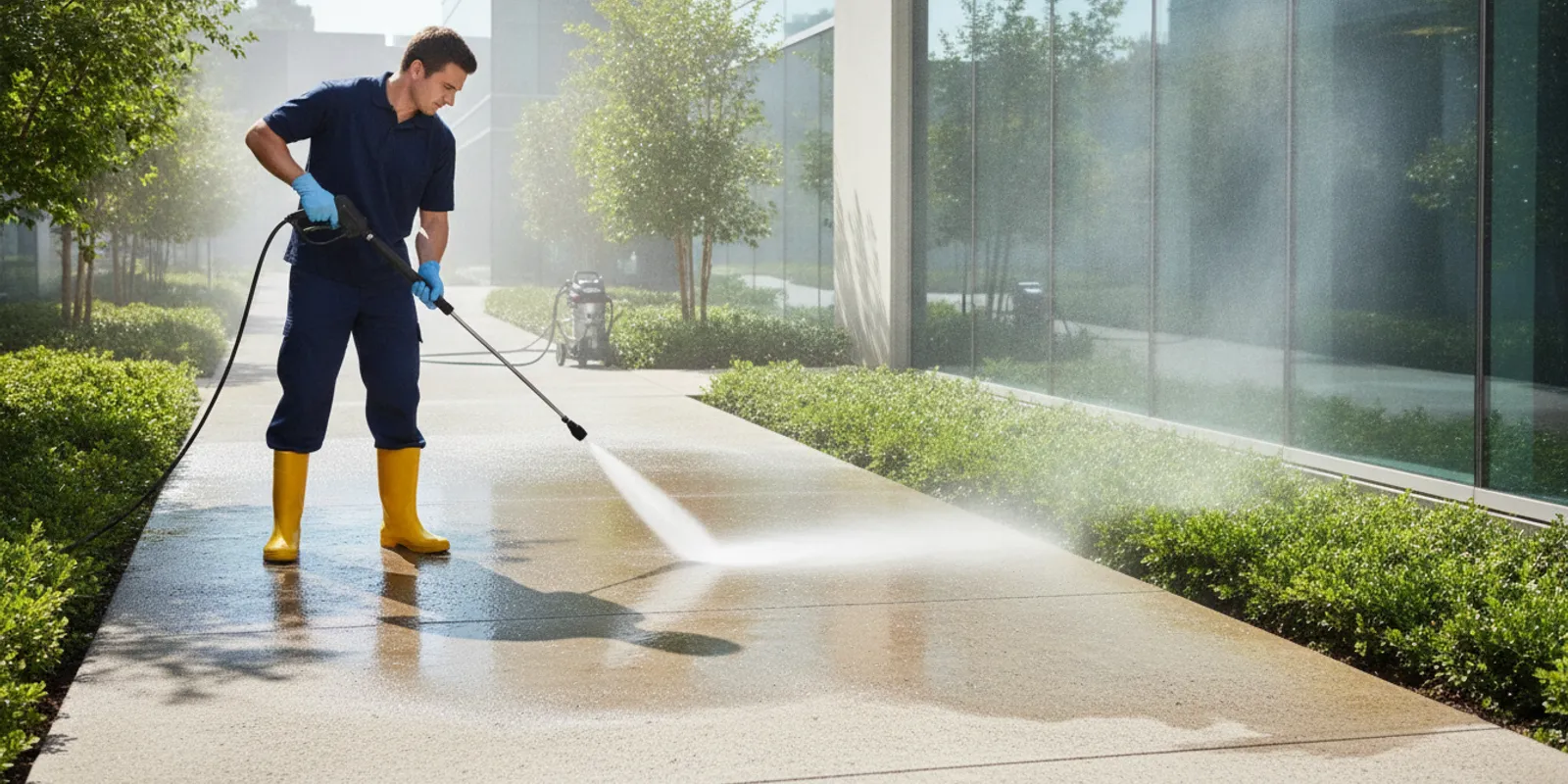
What PSI is a commercial pressure washer? There is no single pressure setting that fits every commercial property or surface. PSI describes pressure, but a suitable cleaning approach also depends on the material, its condition, the soil, water flow, nozzle, distance, and operator technique. A setting that may be considered for sound concrete can be unsuitable for a painted wall, weak mortar, or worn coating. Plan around the surface and the result you need, not one number alone.
Request a free, scoped pressure-washing quote
What does PSI tell you about a pressure washer?
PSI means pounds per square inch. It describes pressure. A pressure washer’s maximum rating tells you what the equipment can produce under specified conditions; it does not tell you what pressure should be applied to every part of a building. The operator must also choose an appropriate nozzle and spray pattern, maintain a suitable distance, control the angle and movement, and consider the material underneath the visible soil.
Water flow is another important part of the equipment picture. GPM, or gallons per minute, describes the volume of water delivered over time. Flow can affect how quickly loosened soil is rinsed and how much area can be covered. Pressure and flow are different measures, and neither one by itself predicts the outcome on a particular property. The machine rating is one input among several, not a complete work plan.
Think of the cleaning result as the interaction of the surface, soil, water, cleaning method, equipment, and operator. If one factor changes, the plan may change. For example, the same walkway may have a stained concrete field, repaired joints, a painted curb, and glass doors nearby. Treating every part as the same material because it is all outside can create a risk of uneven cleaning or damage.
For a property manager, the practical question is not simply, “What is the highest PSI available?” It is, “What is being cleaned, what condition is it in, what is causing the buildup, and how will the work be controlled around the rest of the site?” Those questions help establish whether pressure washing is suitable and what should be included in an assessment.
Why is there no universal PSI for commercial pressure washing?
Commercial properties bring together many surfaces and conditions. One site may include concrete walks, brick, painted metal, glass, sealants, signage, landscaping, loading areas, and entry features. The surface type matters, but its condition matters just as much. Newer, sound paving and older paving with cracks, patches, exposed aggregate, or a worn finish should not automatically be treated alike.
Soil changes the task too. Loose dust, algae, gum, oily residue, and construction debris differ in how they cling and how they should be handled. Applying more pressure is not necessarily the right response to a stubborn spot. Depending on the material and job, a professional may consider a different nozzle or tool, an appropriate cleaning product, dwell time, agitation, water flow, or another cleaning method. The right choice requires assessing the actual site rather than assuming a stronger spray will solve every problem.
Surroundings affect the decision. A narrow entrance beside glass, door seals, electrical fixtures, parked vehicles, or planted beds needs a different level of control from an open paved area. Runoff, slopes, drains, public routes, occupied entrances, and operating hours also shape the work plan. These are reasons to review the whole work area and adjacent features before selecting a method.
Even the desired outcome needs to be clear. “Clean the exterior” could mean rinsing loose soil from a defined walkway, addressing visible organic buildup, or improving the appearance of a loading zone. It does not automatically mean stain removal, restoration, or a like-new finish. Some marks may be embedded, permanent, or connected to surface wear. Agreeing on the practical objective helps the property manager and provider discuss realistic limits.
How do surface type and condition affect the approach?
Use the material and its condition as the starting point. The examples below are planning considerations, not PSI recommendations or instructions to apply a particular setting. Equipment, spray pattern, distance, water flow, cleaning products, and the operator’s judgment all affect how the work is performed.
- Concrete: Sound concrete is often more robust than decorative or coated materials, but age, cracking, repairs, surface finish, and exposed aggregate matter. A worn or patched area can respond differently from the main slab. Identify joints and damaged spots, and discuss whether a limited test area is appropriate before proceeding broadly.
- Brick, block, and mortar: Inspect the masonry and joints for erosion, loose material, openings, or prior repairs. A forceful stream can disturb weak mortar or push water into gaps. Older or weathered masonry deserves careful evaluation rather than an assumption that it can tolerate a concrete-oriented approach.
- Painted and coated surfaces: A finish may be less durable than the substrate beneath it. A concentrated spray or close approach could lift a coating, mark the finish, or drive water behind it. If paint is loose or the coating is deteriorating, document the condition and discuss whether washing is suitable at all.
- Wood and composite materials: Grain, age, coating, construction, and manufacturer guidance can affect the safe cleaning approach. A concentrated jet can mark or splinter some materials. Do not assume the method considered for a paved walkway applies to a deck-like commercial feature or trim.
- Glass, seals, and entry details: Avoid directing a forceful stream at glazing edges, door seals, hardware, sensitive fixtures, or gaps where water could enter. Include nearby features in the protection plan and use a method suited to each material.
- Metal, signs, and exterior fixtures: Coatings, fasteners, labels, electrical components, and the way an item is mounted can affect what it tolerates. Note loose components, peeling finishes, exposed wiring, and fixtures that should be protected or excluded.
- Roofing and elevated elements: These require a separate assessment of material, access, fall hazards, and possible water intrusion. A ground-level plan does not automatically transfer to roofs, upper walls, or elevated equipment.
Before work, look for loose paint, crumbling mortar, open joints, chipped concrete, failing sealant, exposed wiring, prior water damage, and materials you cannot identify. Photograph or mark areas that should be excluded or treated differently. If the substrate is uncertain, do not use a high-pressure test as a way to find out what it is. Ask for an assessment and a controlled plan that recognizes the uncertainty.
Different parts of one building can need different methods. A manager might ask for a walk to be cleaned but also have a painted curb, glass storefront, and landscaped strip along its edge. The written scope should describe the included surface and how the boundaries will be managed. This is more useful than a broad instruction to wash the whole frontage.
How do soil and the cleaning goal influence PSI?
Start by describing what is on the surface and what improvement matters. Is the issue loose dirt near an entrance, recurring organic buildup in a shaded area, gum in a pedestrian zone, or residue near a loading area? Include where the soil appears, how extensive it is, whether it returns, and what has already been tried. These details help a provider consider whether pressure washing fits the job or whether another approach may be more appropriate.
Loose, dry debris may be better collected before water is used. Organic growth may need a method suited to the surface and site conditions. Oil or grease may require appropriate products and a runoff plan; spraying alone can move residue rather than resolve it. Construction residue should be identified before cleaning because leftover material can have different characteristics from ordinary dust. Do not assume that a higher PSI setting addresses the cause of every stain.
Define the outcome in observable terms. For example, a scope might identify the entrance walk and loading-zone pavement, describe the visible buildup, and state that the goal is to clean those specified areas while protecting nearby doors and planting. It should not imply that all discoloration will disappear if the condition could be embedded, etched, or permanent. Clear boundaries make the result easier to review and reduce misunderstandings about what was included.
It can also help to separate a cleaning objective from a maintenance objective. A one-time cleanup may address a particular visible condition, while an ongoing property plan may identify areas that need periodic attention. This article does not set a universal washing cadence; frequency depends on the site, use, surface, local conditions, and the outcome the manager wants. For a building with several cleaning needs, the commercial services overview can help you identify the relevant service conversation without assuming that every capability is a standard package.
Why do GPM, nozzle, and distance matter alongside PSI?
PSI and GPM describe different aspects of a machine. Pressure describes force per area; flow describes the amount of water delivered over time. Flow can influence rinsing and pace, while pressure is only one part of how the spray interacts with a surface. A machine comparison based only on advertised PSI leaves out flow, nozzle, distance, movement, and the condition of the material being cleaned.
The nozzle affects the spray pattern and how concentrated the water is. A narrower pattern concentrates the spray in a smaller area; a wider pattern distributes it over a larger area. The distance and angle matter as well. Moving closer, directing a concentrated stream at a vulnerable edge, or holding the spray in one place can change the impact. These factors call for trained judgment, not casual experimentation on finished building materials.
Operator technique includes maintaining a consistent path, controlling overlap, adjusting movement to the material, and staying aware of adjacent features and people. A suitable plan also considers where the equipment and hoses will be placed and how pedestrian access will be managed. A machine’s maximum setting cannot compensate for poor planning or careless technique.
When reviewing a proposal, ask how the provider will choose the method for each material, whether a test area is appropriate, and how nearby features will be protected. Ask what conditions might change the approach once the work area is inspected. A clear answer should relate the method to the site instead of promising that a particular machine rating will guarantee a specific appearance.
What should a commercial property manager check before washing?
Pressure washing takes place around people, entrances, vehicles, building systems, and neighboring surfaces. A short walk-through can identify constraints before the work is scheduled. It is useful to bring a site contact who knows how the area is used and who can clarify access rules. Walk the requested surfaces and the adjacent area, not only the most visible stain.
- Which surfaces are included, and which should be excluded or handled separately?
- Are there cracks, loose coatings, damaged joints, recent repairs, or signs of water intrusion?
- Where are doors, windows, outdoor outlets, lights, signs, air intakes, and sensitive equipment?
- Where will water travel? Note slopes, drains, landscaped areas, entrances, and neighboring properties.
- Will customers, staff, tenants, delivery drivers, or the public use the work area during cleaning?
- What time window can accommodate noise, hoses, temporary access changes, and equipment?
- Is a water source available, and are there limits on equipment access or staging?
- What visible result is desired, and what existing damage or discoloration may limit it?
Runoff deserves a specific discussion. Identify where water could flow and whether soil, oil, detergent, or other residue is present. The appropriate handling depends on site conditions and applicable local requirements, so do not assume that all wash water can be directed to any nearby drain or landscaped area. For federal environmental information, the U.S. Environmental Protection Agency is an authoritative starting point; check the rules that apply to the specific property and work rather than relying on a general article as a compliance determination.
At an occupied property, coordinate access and tell affected staff or tenants which paths may be temporarily restricted. Identify an alternate route where practical. For a multi-tenant building, determine who can approve work in shared areas and who needs notice. Include the plan for keeping people away from active equipment and wet or obstructed walkways. The details depend on the property and scope, but they should not be left until the work is underway.
For a site that has recurring commercial cleaning as well as exterior needs, clarify which work is being quoted. The commercial cleaning service information describes a broader service category; it should not be read as proof that a pressure-washing task is included in a particular cleaning arrangement. Ask for the requested exterior areas and any related work to be stated explicitly.
How should you compare pressure-washing quotes?
A useful quote explains the work, not just a machine size or a broad phrase such as “wash the exterior.” Ask for the specific areas, surfaces, preparation, cleaning approach, access assumptions, and exclusions to be recorded. This matters when a site includes different materials, visible wear, tenant activity, or runoff considerations.
- Map the work area. Identify entrances, walks, walls, loading zones, or other surfaces by location. Photos or a simple site map can help everyone refer to the same area. Mark features that should not be washed.
- Describe material and condition. Note coatings, repairs, cracks, joints, wear, and fragile features. If you do not know the material, state that rather than guessing. Ask how uncertainty will be resolved before work begins.
- State the cleaning objective. Describe the visible soil and what improvement matters. Distinguish cleaning from stain removal or restoration, and ask the provider to identify limitations.
- Discuss method and protection. Ask how the approach will account for each surface and how adjacent glass, doors, landscaping, fixtures, and pedestrian routes will be managed. Clarify whether a test area or alternative method is proposed.
- Coordinate timing and access. Confirm water access, operating hours, tenant coordination, equipment staging, and how people can enter or move around the property while work is underway.
- Address runoff and site conditions. Point out drains, slopes, nearby planting, oily residue, or other conditions that could affect how water is controlled. Ask who will confirm applicable site requirements.
- Review the written boundaries. Check what is included, what is excluded, what preparation is expected, and what could change the scope. Do not assume unlisted surfaces are covered.
- Agree on how completion will be reviewed. Identify the areas to inspect and the observable goal. Note existing marks or damage so that they are not mistaken for a cleaning issue after the work.
Comparing quotes becomes easier when the scope is consistent. If one proposal includes only the paved entrance and another includes the loading area, storefront details, and more preparation, the totals are not a like-for-like comparison. Ask each provider to describe the same work area and limitations. This avoids treating a single PSI figure as a substitute for a meaningful description of the service.
Photos can make a quote discussion more precise, but they do not replace on-site assessment when material, access, or runoff is uncertain. Send wide views that show where each area sits, then closer views of the soil and any damage. Label which areas matter most and tell the provider if the property has restricted operating hours or a required access route.
Janitor Utah offers commercial cleaning and related facility services, including pressure washing as an adjacent capability. A pressure-washing scope should be discussed for the actual property; it is not a published one-size-fits-all package or price. You can use the contact page to request a free, scoped conversation, and the company background page for information about the business. Include facility type, location, area, soil, desired outcome, and timing so the requested work can be understood.
How does the decision change across common commercial sites?
Consider three hypothetical site situations to see why a PSI rating cannot set the whole plan. These examples are not claims about any particular customer property, and they do not prescribe pressure settings. They show what information a manager and cleaning provider should consider before work is scoped.
A busy office entrance
An office entrance might combine a concrete approach, textured paving, a painted curb, glass doors, a metal threshold, and planters. The manager’s request may be to improve the appearance of the walkway before a busy period. The first step is to mark the requested pavement and identify the features that are not part of the cleaning area. Then note cracks, repaired sections, loose paint, door seals, and the route employees and visitors use.
Timing and access matter as much as the surface. If people need the entrance throughout the day, the plan should identify how they will enter while the work area is restricted and how wet or obstructed paths will be managed. A proposal should define what “entrance” includes, how the glass and plantings will be protected, and what visible result is expected. If a mark remains because it is embedded or the concrete is worn, a manager should not treat a machine rating as a guarantee that it will disappear.
A warehouse loading area
A loading area may have a broad paved surface, vehicle traffic, residue, drains, slopes, and scheduled deliveries. Before deciding on equipment, identify the type and location of the soil and whether any substance needs special handling. Ask where wash water could travel and which entrances or loading lanes must remain available. Coordinate the work window with deliveries and identify staging restrictions for hoses and equipment.
The scope should distinguish the paved area from dock edges, painted markings, doors, equipment, and any nearby pedestrian routes. If oily residue or unknown material is present, the manager should mention it during assessment instead of treating it as ordinary dirt. Agree on what area will be cleaned, what is excluded, and what controls are needed for adjacent activity. These site details may change the method; they cannot be solved just by selecting a higher PSI.
A multi-tenant storefront
A multi-tenant frontage can include different door systems, signs, windows, sidewalk sections, and tenant-specific access needs. One tenant may open early, another may receive deliveries, and public foot traffic may pass throughout the day. A manager can make the request easier to scope by mapping the shared area, documenting each entrance, and identifying a contact who can coordinate notices or temporary access changes.
Ask the provider to clarify whether the scope includes the full frontage or only certain sections. Record any damaged sealant, loose sign components, or areas that should not receive a direct spray. If runoff could move toward a neighboring property or a drain, point that out during the walk-through. A clear plan helps avoid disputes over boundaries and reduces surprises for tenants. It also makes review after the job more concrete: both parties can inspect the same named areas against the stated objective.
A practical decision sequence
For any of these situations, use a consistent sequence before discussing machine ratings:
- Name the outcome. State what should look cleaner and which surfaces matter most.
- Identify the surface. Record materials, coatings, condition, repairs, and uncertain areas.
- Describe the soil. Note where it is, what it looks like, and whether its source is known.
- Map the surroundings. Mark doors, people, vehicles, landscaping, drains, slopes, fixtures, and access routes.
- Discuss a suitable method. Ask how the provider will adapt to each material and whether a test or alternative method should be considered.
- Write the boundaries down. Confirm included areas, exclusions, timing, protection, runoff considerations, and the limitations of the intended result.
This sequence gives the property manager something more useful than a generic equipment specification. It also gives a provider a way to ask focused follow-up questions and explain why the work may differ from one section of the property to another. If an assessment identifies a fragile finish or an unknown material, the decision may be to exclude it or use another method, not to increase force.
What mistakes should you avoid?
- Choosing the machine’s maximum PSI by default. Equipment capacity is not a target for every surface or part of a site.
- Using one method on every material. A property may combine durable pavement with vulnerable joints, coatings, glass, and fixtures.
- Trying to fix every stain with more pressure. Soil type, cleaning product, dwell time, surface condition, and another method may matter more.
- Ignoring flow and spray pattern. PSI alone leaves out other factors that affect how water reaches and rinses a surface.
- Skipping a site review. Access, runoff, occupants, fixtures, and surface condition can change the plan.
- Expecting guaranteed restoration. Cleaning may improve appearance, but it cannot reverse wear, etching, discoloration, or material failure in every case.
- Forgetting adjacent areas. Overspray and runoff can affect glass, doors, plants, vehicles, and neighboring surfaces.
- Leaving access and notice until the service date. Tenants and staff may need an alternate path or advance notice about temporary restrictions.
- Comparing machine ratings instead of written scope. The work areas, material considerations, preparation, and exclusions explain more than a single number.
For a planning checklist focused on site access and preparation, review how to prepare a commercial property for pressure washing. For proposal details related to scope, see the guide to commercial pressure-washing quote factors. These topics complement the PSI question: the site and requested work shape a useful proposal, not a universal machine setting.
How can a professional assessment help?
An assessment connects the desired result to the property’s actual surfaces and operating conditions. A walk-through can identify materials, damaged areas, soil, access, water availability, and potential runoff concerns. It also gives the property manager and provider a chance to agree on the work area, protection needs, and practical boundaries before scheduling.
Prepare the property address, facility type, approximate area, and photos of problem spots. Note known surface materials, access or timing restrictions, tenant activity, drains, and sensitive equipment. If you do not know the material or the source of a stain, say so. Accurate uncertainty is more useful than an unsupported guess because it gives the provider a reason to assess before choosing an approach.
During the conversation, ask the provider to explain why the proposed method fits the particular surface, what areas will be protected, and what limitations might affect the result. If multiple materials are present, ask how those transitions will be handled. If the condition cannot be assessed from photos, discuss whether an on-site review or small test area is appropriate. The goal is a scope both parties understand, not a promise based on a pressure number.
Janitor Utah is a locally owned, non-franchise commercial cleaning company serving Utah businesses. The business discusses scope for the particular facility; it does not publish a universal pressure-washing rate or a guaranteed restoration result. If the site also needs ongoing interior work, the information on janitorial cleaning services can help you distinguish recurring building cleaning from a separately scoped exterior task.
How should you review the area after washing?
A short closeout review helps confirm that the agreed work areas were addressed and that the property is ready to return to normal use. Review against the written scope, not against an assumption that every mark should vanish. Walk the named areas with the provider or site contact when practical. Check the edges and transitions as well as the center of a large surface; small overlooked sections can be easier to spot when viewed against the agreed map or photos.
Look at the result in the context of the surface condition recorded before work. A stain that remains may be embedded, permanent, or related to wear. A mark that was present before cleaning should not automatically be treated as a missed area. If a section appears different from what was discussed, identify its exact location and compare it with the scope and any pre-work photographs. A clear record of prior damage and limitations makes that conversation fairer and more specific.
Also check practical site conditions: whether access routes are open, whether temporary signs or barriers can be removed safely, and whether the area can be used as planned. If any section needs more time to dry or needs a follow-up decision, communicate that to the people responsible for the space. Do not reopen a restricted area solely because the spray equipment has been moved; the property contact should follow the site’s own safety procedures.
For future work, keep a brief record of the date, areas addressed, visible condition, any exclusions, and observations about access or runoff. Photos from consistent viewpoints can help compare the same location over time, but they should be used as a practical record rather than as proof of a guaranteed cleaning result. If the building changes, a coating is repaired, or the soil source changes, update the scope before the next service. A repeat request should not assume that the previous method remains suitable for a changed surface.
This closeout record can also help separate an exterior washing request from recurring interior cleaning needs. If a site has separate service questions, note which work is periodic, which is part of a regular janitorial schedule, and which needs its own assessment. The provider and facility manager can then discuss each scope clearly rather than relying on a general label such as “building cleaning.”
Frequently asked questions
Is a higher PSI always better for commercial cleaning?
No. A higher pressure rating does not automatically produce a better or safer result. Surface material, condition, soil, water flow, nozzle, distance, technique, and nearby features all matter. The appropriate approach should be selected for the particular site.
Can one pressure setting be used across a whole commercial property?
It should not be assumed. A property may have concrete, coated surfaces, masonry, glass, painted details, and worn joints close together. The method may need to vary by area, and some surfaces may need protection, a different cleaning method, or exclusion from the scope.
Does pressure washing remove every stain?
No outcome should be assumed from PSI alone. Some stains may be embedded or permanent, and some discoloration may come from surface wear or damage. Describe the condition and agree on a realistic cleaning objective before work begins.
What information should I send when requesting a quote?
Share facility type and location, the areas to be cleaned, approximate size if known, surface materials and condition, photos, visible soil, access constraints, timing preferences, and any concerns about drains or nearby features. Ask for included areas and exclusions to be documented in the proposed scope.
Should PSI be the main factor when choosing a provider?
No. Ask how the provider assesses materials, chooses a method, manages adjacent areas and access, and defines the intended result. A written scope that addresses the property is more useful than a promise based on a machine rating.
Request a free scoped quote by form or call to discuss your commercial property.
The right commercial pressure-washing plan starts with the surface and site conditions, then selects a suitable method rather than relying on one PSI number.