
Can Pressure Washing Remove Graffiti from Commercial Buildings?
Can pressure washing remove graffiti from commercial buildings? Sometimes, but the result depends on the wall, the marking, and the removal method. A careful plan starts with identifying the surface and testing a small area, not simply turning up the pressure.
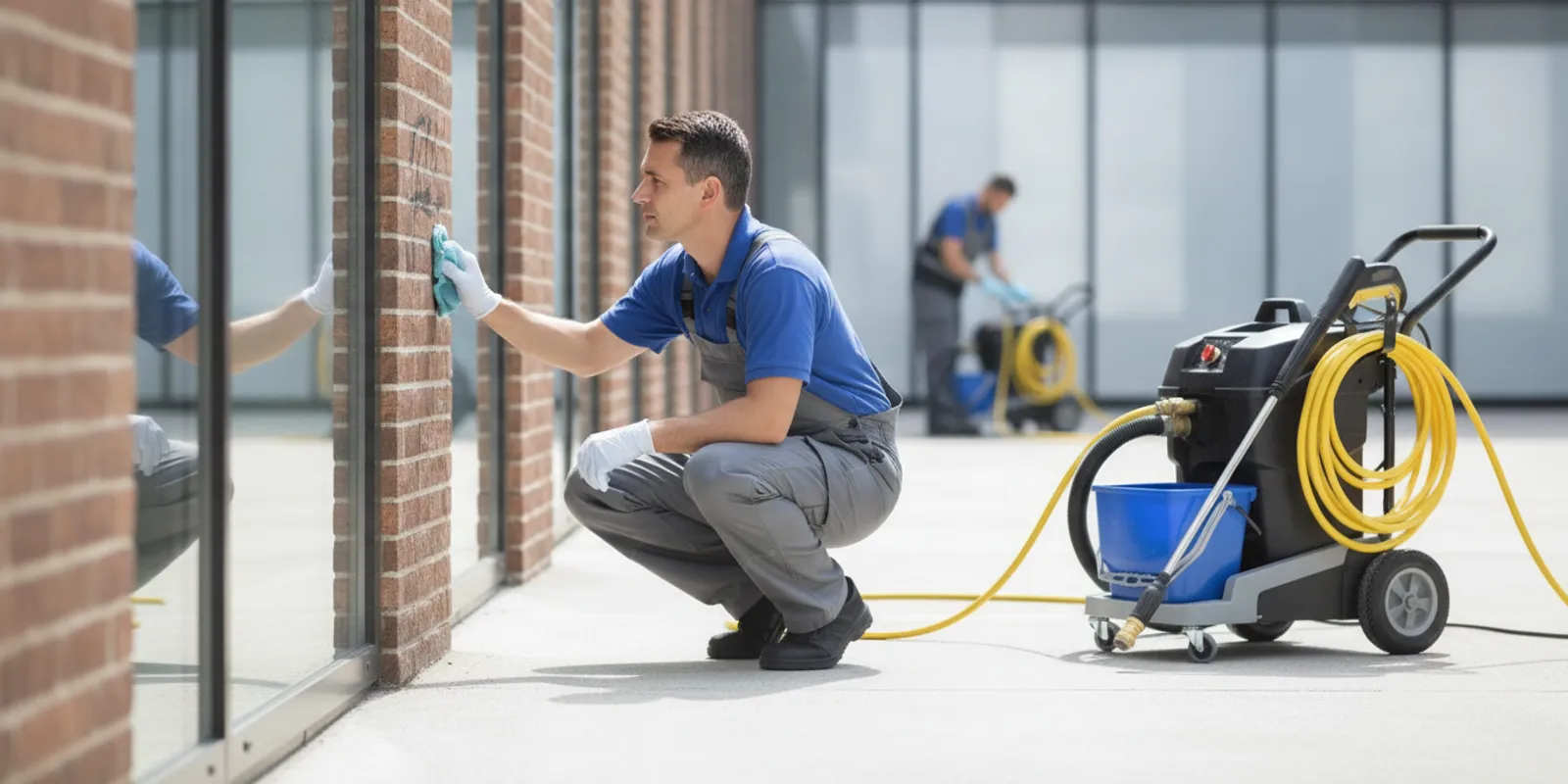
For a property manager, graffiti removal is about more than making a mark disappear. The work should avoid unnecessary damage, control wash water, and fit the building’s access and operating conditions. Pressure washing can help on some durable surfaces, but it can also roughen, etch, or discolor others. In some cases, a suitable cleaner, careful hand work, repainting, or another approach may be a better fit.
Can pressure washing remove graffiti from commercial buildings?
It can remove or reduce some graffiti, particularly when the surface tolerates water and the stain has not deeply penetrated. But pressure washing is not a universal solution. The same setting that is safe for one wall may damage another, and paint or marker may leave a shadow even after the visible layer is gone.
The City of Longmont’s graffiti guidance recommends trying low-pressure washing, monitoring for damage, and not exceeding 700 psi in its context. That is not a universal setting for every building. Start conservatively, use an inconspicuous test patch, and stop if the surface begins to change. For older or significant architectural features, the National Park Service describes options including pressure washing, micro-abrasion, and dry-ice misting. The appropriate choice depends on material and risk of abrasion.
How does the surface change the decision?
Surface porosity, condition, coating, and age affect how far pigment can travel and how much cleaning the material can tolerate. Before choosing equipment, identify what the wall is made of and whether it has paint, sealant, repairs, or existing deterioration.
- Concrete and masonry: Dense, sound concrete may tolerate a controlled wash, but porous block and brick can hold pigment below the surface. High pressure may remove concrete granules or damage mortar. Apache Junction warns that pressure washing bare block may remove granules and cause discoloration or deterioration.
- Painted walls: Washing can lift building paint along with graffiti, especially where the coating is weak or weathered. A compatible cleaning test may reveal repainting a defined section is more consistent than stripping the mark.
- Metal panels: Check coatings, seams, fasteners, and risk of forcing water behind cladding. Aggressive abrasion can scratch a finish.
- Glass: Avoid abrasive tools that can scratch glazing. Identify whether the mark is on the glass or a film/coating, and test only a method approved for that assembly.
- Stone or historic finishes: Softer stone, decorative details, and aged surfaces need particular care. Ask a preservation professional when the material or value of the feature is uncertain.
These are screening considerations, not a substitute for inspection. If the substrate is cracked, flaking, stained, or previously patched, account for that condition during the test. A small, inconspicuous area can help compare removal with any change to the underlying finish. A representative patch matters: a test on a newer repair may not predict what will happen on the original wall.
Also consider how the wall was finished. A painted masonry surface has at least two variables: the underlying masonry and the coating on top. If the coating is already peeling, the cleaning process may expose more bare areas. If a sealer is present, it may affect how a cleaner or water reaches the pigment. Record these conditions before the test so the decision accounts for the visible wall as a whole, not just the mark.
Does paint or marker respond differently?
Yes. Aerosol paint, brush-applied paint, permanent marker, and other inks do not behave alike. Their ingredients and how they bond to a surface influence whether washing, a compatible cleaner, or repainting is practical. The age of the mark also matters: fresh paint may be easier to address than a cured layer, while older pigment may have weathered into a porous material.
Do not apply a strong solvent or cleaner without confirming it is suitable for the substrate and following its product directions. A chemical can spread pigment, soften a coating, leave a halo, or create a different stain. If the exact marking is unknown, begin with a small test and avoid mixing cleaning products. A cleaner that works on one coating can dull another, so note the product and test outcome rather than generalizing from a previous site.
Where a cleaner is considered, follow the label for application, dwell time, rinsing, and protective measures. Do not let a product dry on the surface unless its directions specifically call for that. Plan where the rinse water and loosened residue will go before applying anything. On a vertical wall, test whether the product or pigment runs downward and could stain a lower finish or enter a drain. If the mark covers several colors or materials, use separate small test areas rather than treating the entire patch as one uniform stain.
How do age and previous treatments affect removal?
Freshness can change the effort, but it does not guarantee an easy result. A recent mark may still have penetrated a porous wall, and an older one may have been sealed or partly covered. Ask whether the area has already been cleaned, painted, treated with a remover, or protected with a coating.
Previous attempts can complicate the next one. They may have pushed pigment deeper, roughened the surface, or left a patch that absorbs water differently from the surrounding wall. A plan should account for the whole affected area, not only the darkest visible section, so the treated patch does not stand out more than the original mark. If multiple colors or layers are present, record where each occurs; the removal response may vary across the same wall.
Light and viewing angle can make the final appearance harder to judge. A wall that looks uniform while wet may reveal a pale shadow or a clean outline as it dries. Compare the test after the surface has dried and under ordinary viewing conditions. Check from the sidewalk or approach where tenants and visitors normally see the building, as well as close up. This helps distinguish a true improvement from a temporary wet-surface effect.
What do access and site conditions change?
Height and access affect equipment, worker positioning, water management, and how the job can be carried out safely. A ground-level mark beside an open paved area is different from one above an entrance, near windows, or beside active pedestrian traffic. Consider how to protect people, vehicles, landscaping, signage, and nearby finishes.
Water runoff also needs planning. Wash water can carry paint fragments, cleaners, and soil. Portland’s pressure-washing rules explain that wash water from pressure washing and graffiti removal must not be discharged into the stormwater system there. Requirements vary by location, so check applicable local rules and arrange containment or collection when required. Never assume water can flow into a street drain.
For commercial sites, coordinate work with building operations. Identify business hours, access permissions, loading activity, sensitive areas, and any need to keep an entrance or walkway clear. If the wall is near electrical equipment or a location where runoff could enter a drain, include that in the assessment before work begins. Mark a safe work zone and agree how occupants will be redirected; a short closure may be preferable to letting foot traffic pass through splash or equipment areas.
Consider the building envelope as well as the immediate wall. Water entering a gap at a window, door, panel joint, or damaged seal can create an issue beyond the graffiti location. Nearby signs, awnings, lights, cameras, and vents may also need protection. Ask the site contact whether the wall has known leaks or sensitive equipment behind it. If the job requires working above ground level, access planning and protection of the public become more important; do not treat a longer wand as a substitute for a safe work setup.
Runoff planning should identify the route water may take, not only the closest drain. Sloped pavement, loading bays, landscaping beds, and door thresholds can direct residue in unexpected ways. Decide in advance who will monitor the work area and what should happen if water escapes the planned containment zone. Local rules differ, so the site manager should confirm requirements for the property’s jurisdiction rather than assuming that a method used elsewhere is acceptable.
Why test before treating the whole area?
A test patch helps answer two questions: does the method reduce the graffiti, and does it harm or visibly change the surface? Choose a discreet but representative spot. A test hidden in a different material or coating may not predict what will happen on the main wall.
- Identify the substrate and inspect its condition, including coatings, cracks, loose paint, and prior repairs.
- Record the graffiti’s approximate size, color, apparent material, and age if known.
- Select a cautious method that fits the surface. Begin with the least aggressive practical approach.
- Protect nearby areas and plan how to capture or manage wash water and residue.
- Test a small section, then inspect it after cleaning for pigment shadow, discoloration, roughness, or coating loss.
- Decide whether to continue, change methods, or stop and consider repainting or specialist advice.
Photographs taken before and after the test can help the property team compare results and document the affected area. If a mark lightens but leaves a shadow, be clear about that limitation before extending the work. Complete removal cannot be promised without knowing how the actual surface responds.
Keep a short test record. Note the location of the patch, the method and product used, whether the surface was wet or dry during inspection, and the condition after it dried. A record makes it easier to compare alternatives without repeating an unsuitable attempt on the same area. It also helps a property manager explain why a change of approach is being considered. If the first method produces little improvement or visible substrate change, stop rather than escalating pressure by default.
Agree on a practical stopping point before a larger treatment. For instance, the goal may be to reduce contrast, remove the visible bulk of the marking, or prepare a painted area for repainting. These are different outcomes. Set expectations based on the test rather than assuming the original surface can be restored exactly. If the desired appearance cannot be reached without unacceptable surface change, documenting that trade-off is useful information for the owner.
What should a property manager share when requesting help?
A useful assessment begins with straightforward site details. Share the building location, surface material if known, approximate size and height of the graffiti, how long it has been present, and whether anyone has tried to remove it. Photos taken from a safe distance can help show the wall and nearby access conditions.
- Is the wall bare, painted, coated, or made from brick, block, concrete, metal, or glass?
- Is the mark at ground level, above an entrance, or near a sensitive feature?
- Are there storm drains, landscaping, doors, windows, or public walkways below the area?
- What hours can work take place, and are there access restrictions?
- Is the priority to remove the mark, reduce its visibility, or restore a consistent appearance?
It also helps to explain who can approve a test, how the site is used during the day, and whether the affected wall has a maintenance or finish record. If the mark is near a tenant entrance, notify the tenant before arranging access. A clear request makes it easier to discuss a realistic scope, including what outcome is acceptable if some shadow remains.
Photographs work best when they show both detail and context. Take one closer view that captures the mark and the surface texture, then a wider view that includes the wall’s height, doors or windows, pedestrian routes, and the nearest drainage features. Include a reference object only if it does not require someone to enter an unsafe area. Avoid applying cleaner or water before taking the original photos, since that can change the appearance and make an assessment less useful.
Provide the information in a concise site note: facility address, contact person, acceptable access window, known substrate, approximate area, and any previous treatment. Include the preferred result and any limits, such as keeping a storefront open or avoiding work near a sensitive finish. If the building has a facilities or maintenance record, a note about paint type, coating, or recent repairs can help clarify uncertainty. These details support a scoped discussion; they do not replace an on-site evaluation where the surface or access is unclear.
Janitor Utah offers commercial and building cleaning services, including pressure washing as a marketed capability. The work and quote should be scoped to the site; do not assume every surface or graffiti-removal method is suitable. Review commercial cleaning services, construction cleaning, or the portfolio for related facility work.
How should you decide whether to pressure wash?
Pressure washing may be reasonable when the substrate is sound and sufficiently durable, the test shows progress without surface damage, and runoff can be managed properly. Consider another method when the finish is delicate, graffiti remains embedded after a controlled test, or pressure risks stripping paint, scarring masonry, or driving water behind cladding.
Repainting can be the more predictable way to restore a painted wall, but matching the existing color and sheen may take care. On porous masonry, a specialist may need to assess whether a cleaner, a more controlled removal technique, or a protective coating is appropriate. The right choice balances the visible result with the condition and future maintenance of the building.
When comparing possible methods, evaluate more than speed. Ask what surface change each approach could cause, whether it creates residue that must be contained, how much of the wall would be treated, and whether the result can be inspected before continuing. A method that removes pigment quickly but roughens a prominent finish may be a poor trade. A slower, limited test can protect the larger asset and give the property team a clearer basis for a decision.
The scale of the visible mark also matters. A small isolated tag may call for a different scope than a broad area with several layers or colors. The surrounding finish can influence whether blending is possible: a local patch of new paint may stand out on a weathered wall even if it covers the graffiti. Discuss whether the goal is a localized correction or a more uniform appearance across a larger panel, and consider how each option fits maintenance plans for the facade.
For recurring issues, a property team can keep a simple record of date, location, material, response, and visible result. That history can help identify which surfaces repeatedly require attention and whether a protective finish or a standard repainting approach merits further evaluation. Do not assume a coating is appropriate for every facade; it may change appearance, maintenance needs, or future treatment options. A building professional should assess compatibility before applying it broadly.
Request a scoped commercial quote
For a practical recommendation, share the surface, location, mark size and age, access conditions, and any prior treatment. Janitor Utah can discuss the facility and scope before quoting; the appropriate method and result depend on the actual site.
When preparing for that discussion, it can help to separate known facts from assumptions. For example, note “painted block wall” only if that is confirmed; otherwise describe what is visible and say the material is uncertain. Mention whether wash water can be contained and whether the mark is close to a busy entry. A scoped review should account for the building’s operating constraints and any uncertainty about the finish, rather than treating a single photo as proof that a particular technique will work.
A cautious test and a clear plan for the surface and runoff help property teams make a more informed graffiti-removal decision.