
Commercial Floor Cleaning: What Should a Quote Cover?
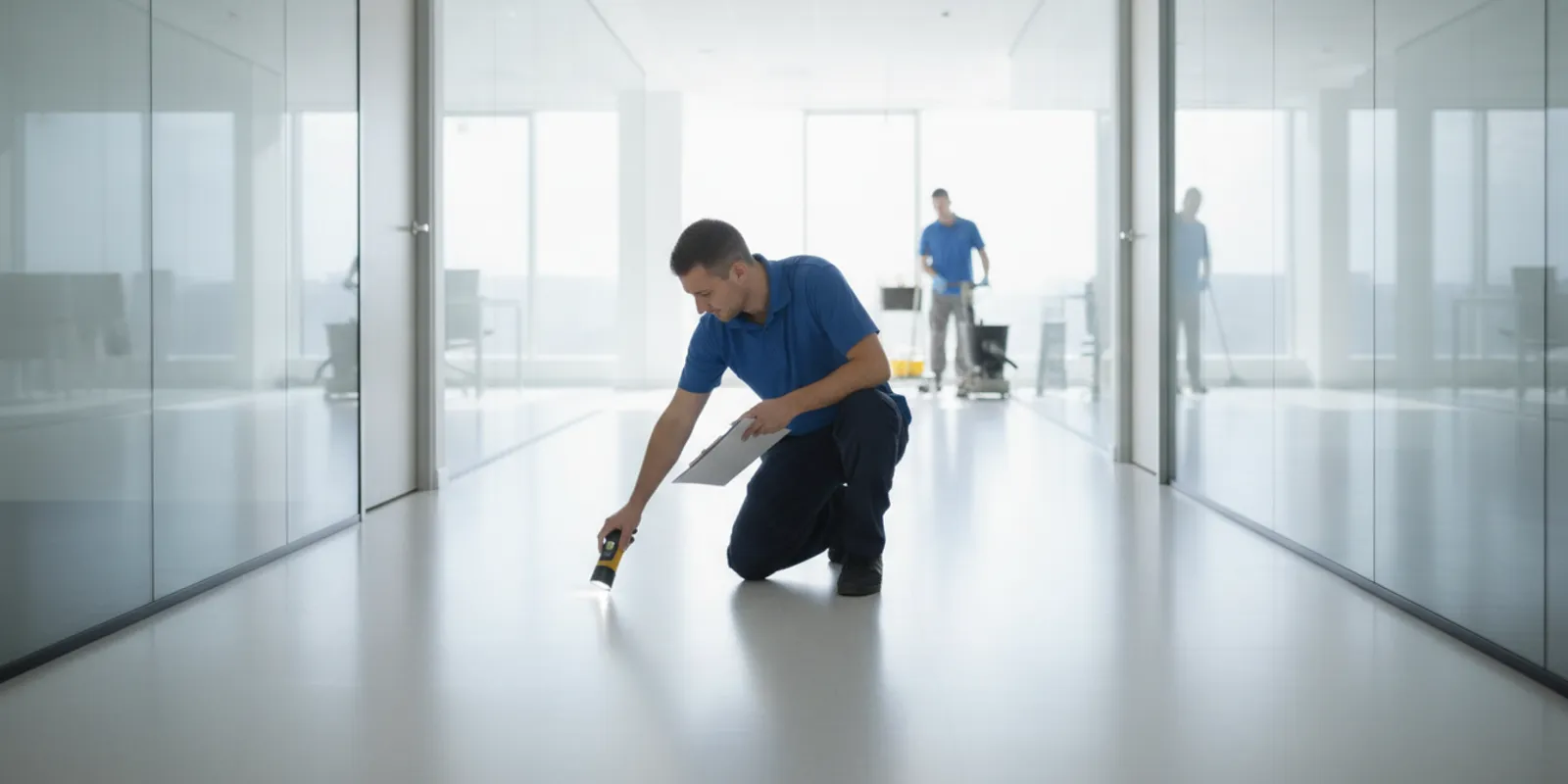
A useful commercial floor cleaning quote starts with the floor you actually have, not a generic square-foot estimate. Surface type, current condition, traffic, requested work, timing, and access all affect what should be included. A little preparation helps a facility manager compare scopes clearly and decide whether the need belongs in a recurring cleaning plan or a separate floor-care project.
Call or request a scoped floor-care quote
What should a commercial floor cleaning quote cover?
A quote should describe the areas to be serviced, the work requested in each area, and how often that work will happen. It should also note relevant conditions or access limits that could change the plan. This makes the proposal useful for both routine planning and one-time work.
Start by separating the floor into practical areas rather than treating the entire building as one surface. A front lobby, private office, restroom, loading zone, and break area may have different materials, traffic, soil, and timing needs. A scope can identify each area by room name, floor plan reference, or approximate dimensions so both sides understand what is included.
For example, a professional office might need regular attention to a hard-surface reception area, periodic care for carpeted meeting rooms, and a separate plan for a heavily used entry. A warehouse may have large floor sections with different traffic patterns and operating constraints. The point is not to assume one treatment fits all. It is to make the areas and requested tasks visible before the work is priced.
Which floor details should you identify first?
Record the information that describes the floor as it exists today. If you do not know the exact material, say so and share a photo or ask to have it assessed rather than guessing. A clear description can prevent confusion about what kind of work is being requested.
- Surface: Identify the floor material where known, such as carpet, tile, resilient flooring, concrete, or another hard surface. Note transitions between materials.
- Area: Estimate the size of each section, or provide a floor plan if available. Separate small rooms from large continuous areas.
- Condition: Describe visible soil, tracked-in debris, scuffs, residue, spots, or areas that receive extra wear. Photos can help explain the issue but do not replace an on-site assessment when one is needed.
- Use: Explain what happens in the area: customer entry, office work, production, storage, or regular movement of carts and equipment.
- Constraints: Flag furniture, stored materials, restricted areas, operating hours, noise concerns, security steps, or other access rules.
These details are especially helpful when comparing a recurring service with a deeper or more specialized project. Janitor Utah describes its commercial floor cleaning service as part of its commercial floor-care offering. Use that page as a starting point, then describe the specific rooms, surfaces, and desired outcome for your building rather than assuming a standard package applies to every site.
How do surface and condition change the requested work?
Different surfaces have different care needs, and the floor's present condition matters as much as its label. Carpet and hard flooring, for example, are not interchangeable tasks. Even within hard floors, the material, finish, installation, and maintenance history can affect which approach is appropriate. A quote should name the work being proposed in plain language and identify any assumptions that still need confirmation.
Ask whether the scope is for routine soil removal, a deeper cleaning, or another specific floor-care task. If you are looking for carpet service, distinguish it from general hard-floor work; Janitor Utah lists commercial carpet and floor cleaning information for those needs. If you are unsure what the floor is made of or what work it needs, share that uncertainty during the walkthrough or quote request.
Condition should be described without assuming that every mark can be removed. Note where the floor looks different from surrounding areas, when the issue is most noticeable, and whether it appears to be recurring. A service provider can use that information to clarify what is in scope and what may require a separate assessment. Do not rely on a broad phrase such as “make the floors look new” as the only project description; it does not identify the surface, task, or limits.
For properties with several flooring types, a room-by-room list is often clearer than a single general request. It can also separate spaces that need regular attention from those that need occasional work. This is useful when a facility is already arranging broader commercial cleaning, because the quote can show which floor tasks are part of the recurring building scope and which are considered separately.
When you prepare notes, use consistent labels for floors and rooms. If a site plan calls an area “Suite 200 east corridor” but staff refer to it as “the main hall,” include both names. Mark rooms that are occupied, locked, or subject to special entry procedures. If you have dated photos, label them with the room and the concern shown; a set of unidentified images can be harder to use than a brief written description. Share only information that helps explain the facility and its cleaning requirements.
How should traffic and operating hours shape the plan?
Traffic helps explain how quickly an area accumulates soil and where wear is concentrated. Consider the number and type of people or equipment moving through each space, when the area is busiest, and where dirt enters the building. An entrance exposed to outdoor foot traffic may need a different schedule from a quiet office used by a small team. In an industrial or warehouse setting, vehicle paths and work zones may matter more than visitor volume.
Describe traffic in practical terms rather than trying to calculate a precise number. You might note that a lobby serves visitors throughout the business day, a corridor connects frequently used departments, or a loading area sees repeated equipment movement. Include seasonal changes if they affect the facility, such as periods with more tracked-in debris. These observations help frame a discussion about the right frequency; they do not dictate a guaranteed result.
Next, explain when work can take place. Can crews access the area during business hours, after closing, or only within a defined window? Are there deliveries, shift changes, public hours, or security procedures to coordinate? If your operation has distinct production and office zones, identify them separately. Janitor Utah also describes industrial cleaning; facility-specific timing and access should be discussed for the actual site rather than inferred from a general service description.
Cleaning frequency should match the areas and tasks under consideration. The company's commercial service information describes recurring schedules ranging from once a day to once a month, tailored to the building. That range is a planning reference, not a recommendation for every floor or facility. A manager can discuss what needs attention between visits and whether a floor project should be scheduled separately from regular janitorial work. See the janitorial cleaning service information when you are considering recurring building care as part of the plan.
Recurring floor care or a separate project?
Use recurring service to describe tasks that should happen on a continuing schedule. Use a separate project description when the need is limited to a particular area, condition, or occasion. The distinction helps avoid a quote that mixes routine work with a larger one-time request without showing what happens on each visit.
| Planning question | Recurring scope | Separate floor project |
|---|---|---|
| What is the need? | Repeatable work for identified areas on an agreed cadence. | A defined task for a specific area or current condition. |
| What should the quote name? | Areas, tasks, visit frequency, and any work excluded from routine visits. | Location, surface, requested work, known condition, and any required access arrangements. |
| What should the facility provide? | Traffic patterns, operating hours, access instructions, and preferred cadence. | Photos or assessment details, project timing, furniture or equipment constraints, and the areas involved. |
| How can it fit with other cleaning? | Coordinate floor tasks with the broader janitorial schedule. | Clarify whether it is separate from or coordinated with ongoing service. |
This comparison is a planning aid, not a published service package or fixed-price menu. Janitor Utah's commercial cleaning services cover facility-specific work, and the exact tasks and schedule should be confirmed for the building. If a floor request is part of a broader recurring plan, name it explicitly so it is not left to assumption.
What should you ask during a walkthrough?
A walkthrough is an opportunity to align expectations about area, access, tasks, and timing. It does not need to be complicated. Bring a floor plan if you have one and walk the spaces in the same order you want them listed in the quote.
- Which areas are included? Confirm room names, boundaries, and any sections that are out of scope.
- What work is proposed for each surface? Ask for task descriptions that distinguish routine cleaning from deeper or project-based care.
- What assumptions need checking? Discuss uncertain materials, unusual residue, existing wear, or areas that may need further review.
- When can the work happen? Explain business hours, access requirements, restricted zones, and any coordination with staff or tenants.
- How often is each task expected? Ask that the cadence be written down and distinguish recurring work from occasional work.
- What is not included? Have exclusions and site responsibilities stated so the proposal does not leave important boundaries unclear.
For multi-tenant buildings, consider whether each tenant area has the same flooring and access arrangements. For a single office, note meeting rooms, reception, hallways, and any spaces that are unavailable at certain times. For an industrial property, map work zones and identify operational constraints. Clear site notes make it easier to assess whether the proposed scope matches the way the building is used.
How can you compare floor-care quotes fairly?
Do not compare proposals by the bottom line alone when the included work differs. Put the relevant details side by side: serviced areas, surface types, task descriptions, visit frequency, timing, access assumptions, and exclusions. If one quote covers a larger area or a different task, it is not an apples-to-apples comparison until those differences are resolved.
Check whether recurring tasks and separate project work are easy to distinguish. Confirm whether the quote describes the same rooms and floors you identified. Ask how a change in area, condition, schedule, or access would be handled before approving the scope. The goal is a proposal that reflects your actual facility requirements, not a comparison based on vague labels.
Facility managers who oversee several services may also want to clarify how floor work fits alongside routine cleaning and supply needs. Janitor Utah lists supply management as an adjacent capability, but that does not mean supplies or every floor task are automatically included in a cleaning quote. Name any requested work and ask for it to appear clearly in the proposed scope.
For general professional cleaning-industry resources, you can also consult ISSA. For a quote on your own property, the useful details remain site-specific: facility type, location, approximate area, floor surfaces, condition, requested scope, and desired cadence.
Keep the final scope accessible to the people who coordinate the building. A concise written record can help a property manager brief staff, explain access arrangements, or check that a later request refers to the same rooms and tasks. If a tenant changes, a space is renovated, or equipment blocks access, flag the change before assuming the existing scope still fits. A new condition or area may call for an updated discussion and quote.
What information should you send with a quote request?
Before reaching out, gather a short description of the property and the floor work you want considered. You do not need perfect measurements to start a conversation, but be clear about what is known and what needs assessment.
- Facility type and location.
- Approximate total area and, if possible, the size of the floor sections involved.
- Surface types by room or zone, including any unknown materials.
- Visible condition, traffic patterns, and areas of particular concern.
- Whether you are considering recurring work, a separate project, or both.
- Preferred frequency, timing, access rules, and operational restrictions.
- Photos, a floor plan, or a contact who can arrange a walkthrough, if available.
Janitor Utah's contact page provides the route to discuss a scoped quote or consultation. You can also explain whether broader office or building cleaning should be considered alongside floor care. Keep the request focused on the actual business facility and the work you want reviewed.
Request a floor-care walkthrough and scoped quote
Frequently asked questions
Does every commercial floor need the same cleaning schedule?
No. Surface, condition, traffic, use, and operating hours vary by facility and area. Describe those details and discuss a cadence for the work being quoted rather than applying one schedule to every room.
Should carpet and hard floors be listed together?
They can appear in one proposal, but identify each surface and the work requested for it. Separate descriptions make it easier to understand which areas are covered and avoid treating carpet service as interchangeable with hard-floor care.
Can a quote be prepared from square footage alone?
Area is useful, but it does not explain surface type, condition, access, traffic, or scope. Provide approximate measurements along with those other details; a walkthrough or additional assessment may be needed to clarify the work.
Should routine cleaning and a deeper floor project be one scope?
They may be discussed together, but ask that recurring tasks and project work be clearly separated. The written scope should state which work happens on each regular visit and which work is a distinct request.
Set the floor scope around your facility
A clear floor-care request connects each area to its surface, current condition, traffic, access, and desired frequency. Bring those details to the conversation, ask for tasks and exclusions to be written down, and compare proposals only after confirming they cover the same work. That gives your facility a more practical basis for planning commercial floor cleaning.