
How Often Should Commercial Carpet Be Cleaned?
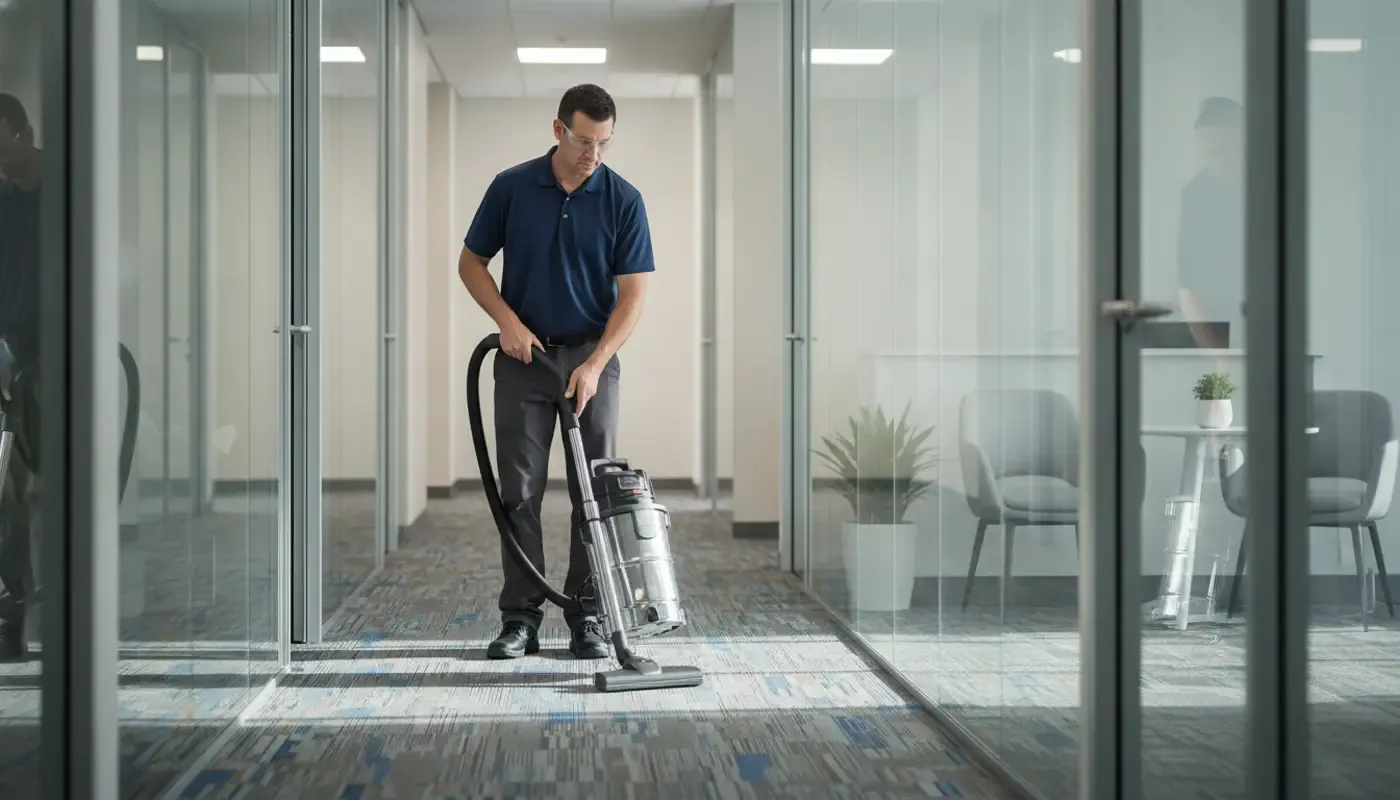
How often should commercial carpet be cleaned? Most Utah facilities need daily vacuuming on busy routes and same-day spot care. Plan a deeper clean only when soil, traffic, or appearance shows that routine work is no longer enough. No single calendar fits a quiet office, a clinic lobby, and a retail entry. Start with the rooms, the wear you can see, and the hours the space can be out of use.
Call (801) 500-4747 to talk through your carpet, or request a scoped carpet cleaning quote.
How often should commercial carpet be cleaned in practice?
Carpet in a commercial building collects dry soil from shoes, plus the smaller share of spots that are wet, oily, or sticky. A published "every six months" rule ignores whether that soil lands in one entry or across a whole floor. Janitor Utah treats carpet care as specialist work inside a larger commercial cleaning conversation, not as a package with a fixed visit count.
The ISSA guidance on keeping commercial carpet looking its best separates everyday vacuuming and spot care from heavier work. Interim cleaning targets soil traps. Restorative cleaning is for carpet that is already heavily soiled. That split is a planning tool. It is not a promise that more frequent cleaning will extend the life of every carpet, and it is not a price.
Before you pick dates, walk the building the way people use it:
- Entries, elevator lobbies, and the paths between them.
- Quiet offices, conference rooms, and storage that see little foot traffic.
- Places where food, drinks, or outdoor soil show up often.
- Hours when the space can be vacuumed or left to dry.
Still deciding whether the carpet should be cleaned, or whether it is too worn to keep? Start with the guide on whether commercial carpet cleaning is worth it. This article assumes the carpet is still in service and you need a cadence.
Match the visit to the kind of soil
A useful schedule names the work, not just a month. Vacuuming, spot care, interim cleaning, and restorative cleaning answer different problems. Mixing them into one annual visit usually means the busy lanes look tired long before that date.
| Work | What it addresses | A practical starting cadence |
|---|---|---|
| Vacuuming | Loose, dry soil on the surface and in the pile. | Daily on traffic lanes. One or two times a week in low-use rooms. |
| Spot care | A fresh spill or a mark you can point to. | The day it appears, before it is walked in. |
| Interim cleaning | Soil that keeps returning in entries and main halls. | Schedule it through the year for those lanes only. Harsh entries may need it much more often. |
| Restorative cleaning | Carpet that looks dull or matted after routine care. | When condition calls for it. Not on a date picked in advance. |
ISSA notes that vacuuming removes most of the loose, dry soil people track in. The remaining soil is wet, oily, or sticky, so it needs a cleaning method rather than another pass with a vacuum. For busy entries, halls, and work areas, the same guidance points to daily vacuuming and prompt spot care. It also points to interim cleaning of soil traps through the year, and restorative cleaning only when needed.
Treat that as a range to test, not a quota. A medical waiting room and a back office in the same building should not share one number. Janitor Utah discusses commercial carpet cleaning from the areas, the visible condition, and how the floors are used. The method and the timing come out of that conversation.
Let traffic and the workday set the vacuum plan
Vacuuming is the part of carpet care that belongs with everyday janitorial work. On the office and janitorial page, Janitor Utah asks which spaces need recurring care, how often you want that care, and when crews can get in. Carpet lanes should be on that list instead of waiting for a separate project every time the entry looks gray.
A workable split for many buildings looks like this:
- Main entries, lobbies, and connector halls. Vacuum on every janitorial visit, which for a busy site is often every open day.
- Work areas with steady but lighter use. Vacuum several times a week, or on the same days as the rest of the route.
- Private offices, storage, and little-used rooms. Once or twice a week is often enough unless a project or event changes the pattern.
Recurring commercial cleaning at Janitor Utah is discussed from once a day to once a month. That range is the schedule for the building's janitorial program, not a rule that carpet extraction happens on every visit. Daily vacuuming can sit inside a five-day route. A deeper carpet clean is its own scoped task.
Access matters as much as foot traffic. A clinic may not allow wet carpet during patient hours. A retailer may need the entry dry before opening. An office may only offer an evening visit. Those sites will not share a clock time, even when the weekly count matches. Bring the real window to the walkthrough.
If you want carpet care added to an existing route, say so when you discuss office and janitorial cleaning. Keep the deeper work as its own line so it is not assumed to be included.
Plan deeper care around condition, not a slogan
Interim cleaning is for the lanes that get dirty again even when they are vacuumed. Entries, the first twenty feet inside a door, and the path to elevators or restrooms are the usual soil traps. Cleaning those lanes on a schedule uses less water than a full-floor restoration. The carpet also dries sooner, which matters when people need the space back the same day.
Restorative cleaning is the heavier pass. It fits when the carpet looks matted or dull after vacuuming and spot care, or when soil has been left until it no longer comes up with routine work. It does not repair crushed or worn fiber, and it will not fix a door mat that is missing or an entry that stays wet. If the question is really "should we replace this," go back to the worth-it guide rather than booking a deep clean by default.
Use what you can see between visits:
- Traffic lanes turn gray days after vacuuming.
- The same spots return because the source, such as a leaking machine or a food station, is still there.
- The pile stays flat in the busiest path.
- Low-use rooms still look acceptable on the lighter schedule.
When those signs show up only in one zone, clean that zone more often and leave the rest alone. A full-floor appointment every time is how facilities spend time and disruption on carpet that did not need it.
Green products can be part of the request. Janitor Utah uses green-leaning products whenever possible, not on every job and not as a certification. If your building has a required product list, bring the product names and labels to the walkthrough. Do not expect a claim that a method leaves carpet germ-free or extends its life by a set number of years. Neither result is something we can promise from a calendar.
Adjust the cadence for the facility you actually run
The same county and the same square footage can hide very different carpet. Janitor Utah's commercial work is aimed at facility managers, property managers, and owners of offices, clinics, industrial sites, retail, and daycare. Carpet shows up in all of those buildings, but not in the same rooms.
Offices and professional suites
Entries and the path from the elevator do the most work. Private offices and conference rooms usually need vacuuming a few times a week and deeper care only when a meeting room takes food service or an event. If the suite is part of a larger commercial cleaning program, keep daily vacuuming on the janitorial route and schedule interim cleaning for the lobby separately.
Medical and dental spaces
Waiting rooms and public halls collect outdoor soil all day. Treatment rooms may have product rules, limited access, and hours when the floor cannot be wet. Medical and dental facility cleaning starts by naming the rooms, the surfaces, and the times crews can enter. Carpet cadence should follow that list. Bring any required products and written facility rules. We will not describe the work as infection control or as a certified medical process.
Retail, daycare, and warehouse offices
Retail entries and daycare corridors often need the short end of the interim range. Soil returns fast there, and spots are common. Warehouse and industrial sites may have carpet only in the office and break area. The production floor is a different surface. Say which rooms are carpet and which are hard floors so the quote does not blend them. Hard-floor stripping and waxing are a separate conversation from carpet cadence.
Serviceability is a site question. Janitor Utah's published commercial focus includes Salt Lake, Utah, Davis, Summit, and Tooele counties, and every request still depends on the address and the work. Share the site address when you ask. A city name alone does not confirm the route.
What to write down before you ask for a quote
A scoped quote needs the job, not a guess at a rate. Janitor Utah does not publish a carpet price, an hourly rate, or a per-square-foot figure. Scope and price come from the facility. The notes below are what make that conversation specific.
- Facility and address. Building type, city, and the rooms that have carpet.
- Condition. What you see in the lanes versus the quiet rooms, including spots you cannot identify.
- Traffic. Which entries and halls are busy, and whether soil is dry dust, food, or weather.
- Cadence you want to discuss. Daily or route vacuuming, spot response, and whether you are asking for interim care, restorative care, or both.
- Access. Hours the space can be closed or left to dry, keys or escorts, and any product rules.
- What is out of scope. Hard floors, upholstery, or a replacement decision you are not asking us to make.
If fiber type, a prior treatment, or the source of a stain is unknown, say that. Guessing on the form leads to a scope that does not match the floor. A walkthrough can sort out the unknown items. It does not lock a price before the work is defined.
You can start from the carpet page or from the contact form. Either way, include the site address and the type of work. A request is a conversation, not a confirmed appointment and not an instant booking.
Tell us about your facility and carpet
Frequently asked questions
How often should commercial carpet be cleaned?
Vacuum busy lanes on every janitorial visit, often daily, and vacuum low-use rooms one or two times a week. Spot-clean the day a spill shows up. Schedule interim cleaning for entries and main halls through the year, and use restorative cleaning when the carpet no longer responds to routine care. Adjust those ranges after you see how fast soil returns.
Does professional cleaning on a frequent schedule damage commercial carpet?
ISSA's facility guidance pushes back on the old worry. Proper cleaning at a suitable frequency helps carpet keep its appearance. Waiting until it is heavily soiled makes the job harder. The method still has to match the carpet and the soil. More water is not automatically better, and no schedule repairs fiber that is already worn out.
Should every room be on the same carpet schedule?
No. Entries, lobbies, and connector halls collect more soil than private offices and storage. Clean the soil traps more often and leave quiet rooms on a lighter vacuum plan. One date for the whole floor usually over-cleans some rooms and under-cleans the lanes people actually see.
Can carpet cleaning be part of regular janitorial service?
Vacuuming and simple spot care fit a recurring office and janitorial route. Interim and restorative carpet work are scoped separately so the visit, the dry time, and the method are clear. Tell us if you want both, and which rooms belong on the route versus a scheduled project.
Will a quote include a price per square foot?
No. Janitor Utah does not publish carpet rates. A quote reflects the rooms, the condition, the method, the access window, and the cadence you want. Share those details and the site address, then we discuss the scope. Comparing a single square-foot average from another market will not describe your building.
Set the cadence, then ask for the scope
How often commercial carpet should be cleaned depends on the lanes people walk, the soil they bring in, and the hours you can give the work. Daily vacuuming and same-day spots carry most buildings. Deeper cleaning belongs on the entries and halls that need it. A full restorative visit belongs on the calendar only when condition calls for it.
Janitor Utah is the Utah commercial cleaning brand of Jani-Serv, Inc. We plan carpet care around the facility you describe, from once-a-day janitorial routes to a separate carpet visit. Bring the rooms, the condition, and the timing. We will talk through a scoped quote.
Call (801) 500-4747 to start by phone, or request a scoped quote for your carpet.