
What Is Janitorial Cleaning? Scope for Business Owners
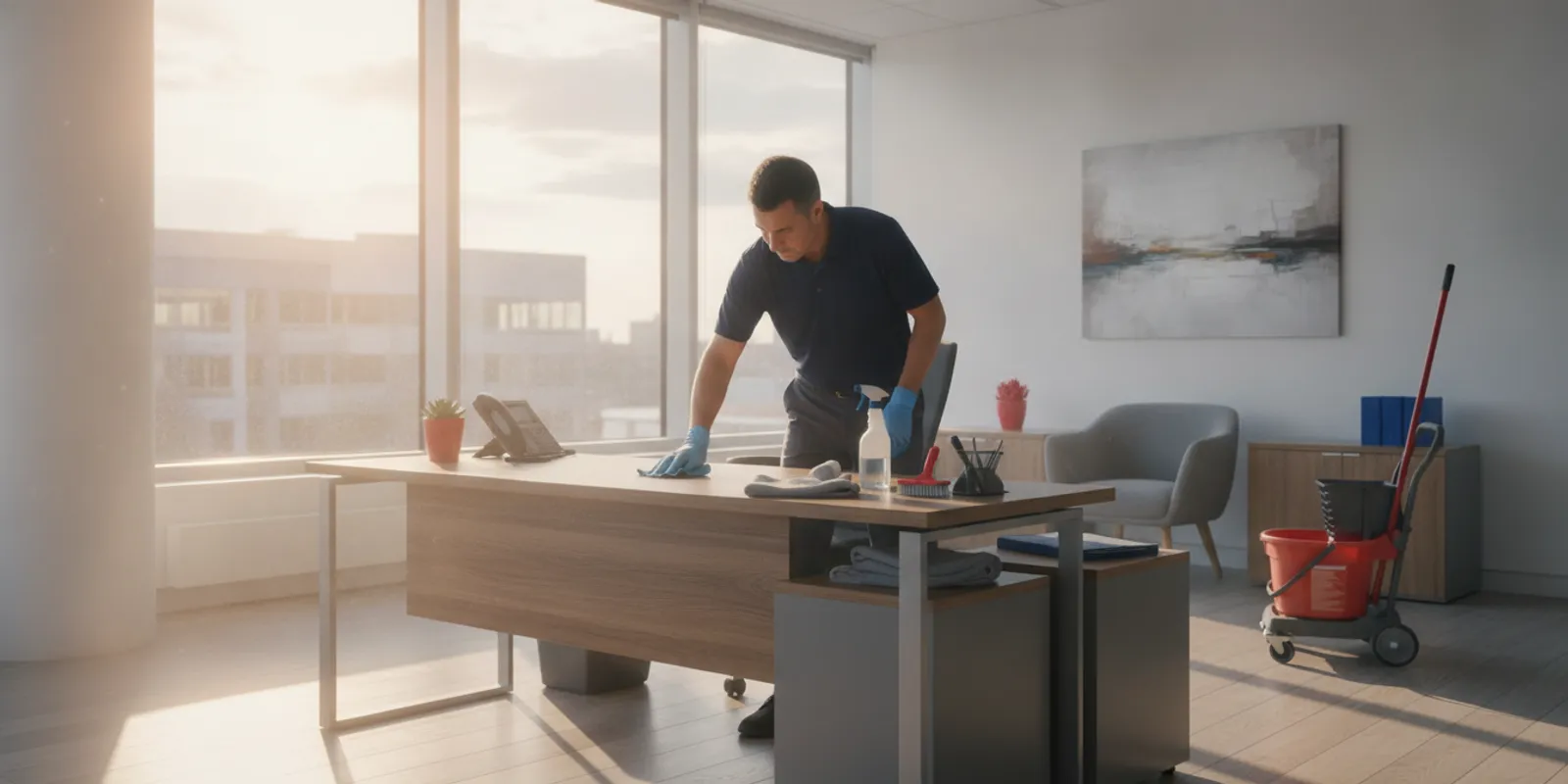
What is janitorial cleaning? For a business, it is ongoing cleaning and basic upkeep planned around the facility, the people who use it, and the workday. Rather than treating every visit as a one-off project, a recurring janitorial arrangement sets out which routine tasks need attention, how often they should be done, and who is responsible for them. The right scope is specific to the building, not a generic checklist.
Request a scoped commercial cleaning quote
What does janitorial cleaning mean for a business?
Janitorial cleaning is the recurring care that helps a commercial space stay orderly and ready for normal use. A program may cover routine work in offices, shared areas, restrooms, break areas, lobbies, or other agreed parts of a building. The exact tasks depend on what the facility needs and what the service scope includes.
For example, a business might ask for routine floor care, trash removal, and attention to frequently used surfaces. Another facility may need supply restocking included, or may have separate requirements for customer-facing areas and staff-only spaces. These are examples to discuss, not automatic inclusions in every arrangement. The written scope should state which areas and tasks are covered.
Janitorial service is often scheduled as a repeating route, with visits ranging from daily to monthly depending on the arrangement. The schedule and task list should fit actual use. A busy lobby may need attention more often than a low-traffic storage area, while a small office with limited daily use may have different priorities from a multi-tenant building.
Janitor Utah provides customized recurring commercial cleaning, with the work and cadence scoped to the facility. Learn more about janitorial cleaning support and the details to discuss for a recurring program.
Which tasks belong in a recurring janitorial scope?
Start by thinking about the work needed to keep the facility presentable and usable between deeper or specialized cleaning projects. A practical scope names each area, the routine task, and its expected frequency. It should also identify work that is not part of the recurring visit so that no one assumes it is included.
- Shared spaces: Identify lobbies, corridors, meeting rooms, and other common areas that need routine attention.
- Work areas: Clarify which desks, counters, conference spaces, or other surfaces are in scope, and whether staff need to clear or secure items first.
- Restrooms and break areas: State which areas are covered and whether replenishing agreed supplies is part of the work.
- Floors and waste: Specify the floor types and routine care expected, along with which bins or waste points are included.
- Access and timing: Note operating hours, entry procedures, restricted rooms, alarm instructions, and any activities that cannot take place during business operations.
Specificity matters more than a long list of broad labels. “Clean the office” leaves room for different interpretations. A clearer scope might identify the reception area, conference rooms, and restrooms, then list the tasks expected in each and how frequently they are scheduled. If supplies should be managed as part of the work, discuss that separately; commercial supply management is an adjacent service to ask about, not something to assume is included in a routine cleaning visit.
Consider a hypothetical office with a lobby, several work areas, a meeting room, and shared restrooms. The buyer could define the lobby and restrooms as higher-priority shared areas, specify which surfaces and floor care are expected, and identify the meeting room as a scheduled task rather than an assumed daily duty. The point is not to adopt this as a universal checklist. It is to show how a scope can reflect the way the actual building is used.
Likewise, clarify what happens when a room cannot be accessed or a business activity changes the normal routine. A site contact and a simple reporting process can help flag an unusual condition or missed access without quietly expanding the regular scope. If the company adds a department, changes its hours, or begins using a previously quiet area, revisit the tasks and cadence with the provider.
How does recurring janitorial work differ from deep or project cleaning?
Recurring janitorial work keeps up with routine needs on an agreed schedule. Deep cleaning and project work address a particular condition, surface, or event that may not be part of each regular visit. The distinction helps a buyer set the right expectations: a recurring route is not automatically a comprehensive restoration or a one-time cleanup of every part of a building.
| Work type | Typical purpose | How to plan it |
|---|---|---|
| Recurring janitorial cleaning | Maintain agreed routine areas and tasks over time. | Set recurring visit cadence, task list, area boundaries, and access details. |
| Periodic floor or carpet care | Address a floor or carpet need beyond ordinary upkeep. | Describe the material, condition, affected area, and desired timing; request a separate scope if needed. |
| Construction cleanup | Prepare a site during or after construction work. | Explain the project stage, site readiness, areas, and any handoff date to be considered. |
The table is a planning distinction, not a promise that every service is bundled or available on every schedule. For instance, a facility may need routine floor maintenance alongside periodic specialist attention. Ask how any added task would be defined and scheduled rather than assuming it is covered by a general janitorial description. Janitor Utah also describes commercial floor care and commercial carpet and floor cleaning as adjacent capabilities to discuss where appropriate.
How should a business choose the visit frequency?
Begin with the pattern of use, not a preset number. Consider how many people use each area, whether visitors come through, when the space is occupied, and which parts show soil or clutter fastest. The schedule can then give higher-use areas appropriate attention without treating every room as if it had the same needs.
Review practical conditions such as:
- Traffic: Which entrances, corridors, restrooms, or shared rooms are used most?
- Operating hours: Can cleaning happen before opening, after closing, or at another agreed time?
- Daily activities: Are there shifts, customer appointments, deliveries, or production processes that affect access?
- Changes in use: Does the facility have busier seasons, events, or departments with different schedules?
- Observed condition: Which areas tend to need attention first, and which can go longer between visits?
One useful planning method is to separate the facility into zones. Mark areas used throughout the day, rooms used only at certain times, and spaces with special access limits. Then describe the routine attention each zone needs and ask whether the visit schedule can cover it. This is more useful than choosing frequency by square footage alone, since the pattern of use and the requested tasks also shape the plan.
Also distinguish the planned baseline from occasional requests. A scheduled visit may follow the agreed task list, while an event, spill, renovation, or sudden change in occupancy could require a separate conversation. Clarify how the facility should report that need and whether it would change the quote or schedule. No service plan should be treated as covering unplanned work unless that work is specifically agreed.
Do not use a frequency rule from another building as a substitute for a walkthrough and discussion. A clinic, professional office, warehouse, retail site, or daycare may have distinct room layouts and activity patterns. Even two offices with similar square footage may have different traffic, access, and service priorities. The goal is a workable schedule linked to the agreed tasks, with a way to revisit it if use changes.
For industrial or warehouse settings, describe the parts of the facility that need routine attention and any operational constraints. Janitor Utah lists industrial cleaning among its service areas; a request should explain the site and work involved rather than assume a standard package.
A warehouse request, for example, can distinguish office areas, break spaces, aisles, and other zones instead of describing the entire site as one room. Explain any equipment, active work areas, restricted access, or timing limits that affect where and when cleaning can occur. The provider can then consider those details when reviewing the request. The same principle applies to clinics, retail locations, and daycare: describe the rooms, activity, and operating constraints, and ask which duties are appropriate to include. Do not infer a particular certification or compliance status from a facility-specific scope.
What should be written into the cleaning scope?
A good scope makes the service understandable to the buyer and the cleaning team. It should record the facility details, task boundaries, schedule, and points of coordination. The following questions can help turn a general request into a useful discussion:
- Which facility and areas are included? Name the business type, location, floors or suites, and the rooms that need attention. Note areas that are excluded or access-restricted.
- What should happen in each area? Separate routine duties by room or zone. Explain priorities, floor materials, waste points, and supply needs where relevant.
- How often and when? Describe the preferred cadence and any time windows or operating constraints. Ask whether the proposed schedule fits the tasks requested.
- Who handles what? Clarify which supplies are provided, what the facility team prepares, and how access, keys, alarms, or locked rooms are coordinated.
- What requires separate planning? Identify periodic floor or carpet care, windows, pressure washing, disinfection, or construction cleanup if those needs apply. Do not assume specialty or project work is included in routine service.
- How will a change be raised? Agree on how the facility can report a change in hours, room use, access, or priorities and how any scope adjustment will be reviewed.
Before finalizing the scope, compare the written task list with how the facility is managed day to day. Check that the named rooms match the building’s current layout, that any locked or sensitive areas have clear access instructions, and that the schedule does not conflict with opening, deliveries, or other work. If multiple people manage the property, designate who can approve changes and who receives service questions. That small bit of coordination can prevent different departments from assuming different things are included.
If cleaning products or chemical use is relevant to the site, share applicable product restrictions and workplace procedures during scoping. OSHA provides general workplace safety resources at the Occupational Safety and Health Administration website; facility managers should consult the resources and requirements that apply to their own workplace. Avoid treating a vendor conversation as a replacement for your organization’s safety program.
Environmental preferences can also be discussed. Janitor Utah’s stated approach is to use green products whenever possible, not to guarantee a particular product for every surface or task. Tell the provider about material sensitivities, product restrictions, and site expectations so that options can be considered for the actual work.
What information helps you request a useful quote?
Give the provider enough context to understand the facility and the recurring need. A request that says only “we need office cleaning” leaves important questions open. You do not need to design the cleaning plan yourself; clear starting details help the provider ask the right follow-up questions and scope the work.
- Facility type, address or service area, and approximate size or number of floors.
- Rooms and zones to include, plus any areas that should remain out of scope.
- Current condition and the routine tasks that matter most to your operation.
- Preferred visit frequency, available time windows, and business hours.
- Floor types, supply management needs, access procedures, and any product restrictions.
- Separate or occasional needs, such as floor care, windows, or construction cleanup.
A walkthrough can help clarify site conditions and priorities. A quote should be based on the facility and requested scope rather than a generic price assumption. Janitor Utah offers customized commercial cleaning for businesses and directs prospective customers to its commercial cleaning services information. For questions about child-care settings, see the company’s information on daycare cleaning services and describe the facility and its specific needs.
Frequently asked questions
Is janitorial cleaning the same as office cleaning?
Office cleaning can describe cleaning work in an office, while janitorial cleaning commonly refers to an ongoing schedule of agreed cleaning and upkeep tasks. The terms can overlap. The useful question is what areas, duties, and visit schedule the proposed scope actually covers.
Does a recurring janitorial visit include deep cleaning?
Not automatically. A recurring scope covers the specified routine duties. Periodic floor or carpet care, construction cleanup, or another project may need its own description and quote. Ask which work is included and which requires separate planning.
How often should a business schedule service?
There is no single cadence that fits every facility. Consider traffic, hours, room use, and observed condition, then discuss a schedule that matches the tasks and building. Janitor Utah can discuss recurring programs from once a day to once a month, depending on the arrangement and facility scope.
Can janitorial cleaning cover different kinds of commercial facilities?
Janitorial needs vary across offices, medical and dental clinics, industrial and warehouse sites, retail, and daycare. Describe the facility and its operating conditions so the scope can be considered for that setting; do not assume all facilities require the same tasks or schedule.
Set the scope around the facility
Janitorial cleaning works best as a clearly defined recurring service: identify the areas, choose the tasks, agree on a practical cadence, and separate routine work from occasional projects. Share the facility type, location, size, access needs, and priorities to begin a scoped discussion. For a quote by phone, call Janitor Utah to discuss your commercial cleaning needs, or use the contact form to describe the facility and request a consultation.
Call to discuss a commercial cleaning scope
A clear request gives both sides a practical starting point for deciding what recurring service should cover.