
Daycare Cleaning Service: Questions to Ask
Originally published
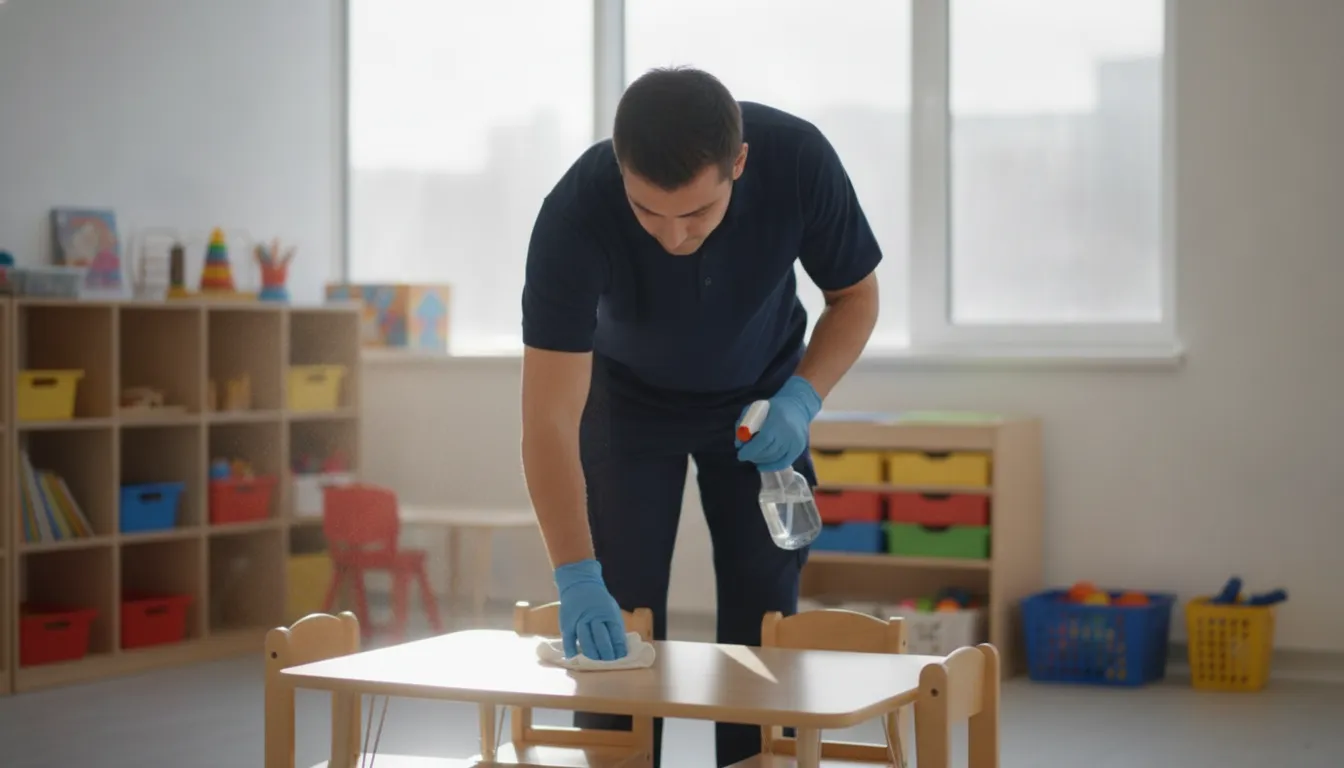
A daycare cleaning service is a recurring commercial cleaning plan for classrooms, play areas, restrooms, and shared spaces in a childcare facility. The useful question is not whether a company says it cleans daycares. It is whether the proposed scope names the rooms, the high-touch surfaces, the hours staff can be on site, and who supplies products. Janitor Utah builds that scope with the facility before preparing a quote. Teams that also run an office suite can use the same scoping habit described for professional office cleaning in Salt Lake City.
Request a scoped daycare cleaning quote
What a Daycare Cleaning Service Should Cover
Start with a room list, not a slogan. A childcare center is several kinds of space in one building. Infant rooms, toddler classrooms, a preschool room, a kitchen or bottle-prep area, restrooms, a staff office, and the entry all get used differently. A useful proposal names those rooms and says what happens in each one.
Ask the provider to separate routine cleaning from project work. Routine work is the recurring pass: floors, restrooms, trash, and the surfaces children and staff touch all day. Project work is different. It might be a floor refinish, a window wash, or a one-time disinfection after an illness notice. Mixing those into one vague line makes the quote hard to compare.
Janitor Utah's daycare cleaning is scoped around the rooms you identify, from once a day to once a month. The service page is the place to see the offer. This guide is the list of questions to ask before you request that quote.
Bring a simple floor sketch or a room count to the first call. Include approximate square footage if you have it, plus which rooms are off limits during certain hours. That detail does more for a fair quote than a generic request for full service.
Rooms and High-Touch Areas to Name
The Centers for Disease Control and Prevention tells early care programs to clean visibly dirty surfaces daily and after meals or activities. Clean before you sanitize or disinfect. The same guidance says high-touch surfaces such as tabletops, doorknobs, handles, and toys are more likely to carry germs. Items children put in their mouths should be sanitized with a product suited to that surface. Read the CDC guidance for early care settings with your staff so the cleaning scope matches the routine you already run during the day.
Cleaning, sanitizing, and disinfecting are not the same job. Cleaning removes dirt with soap, water, and scrubbing. Sanitizing lowers germs on mouth-contact items. Disinfecting uses a stronger product on surfaces after cleaning, often when someone is sick. A daycare cleaning service should say which of those steps is in the proposal and which stay with your teachers during the day.
Walk the building and mark the surfaces that matter. Typical high-touch spots include door handles, crash bars, and the sign-in screen. Add light switches, cubby edges, and chair backs at child height. Meal and art tables, including high-chair trays, belong on the list. So do restroom flush handles, faucet knobs, and changing-table rails. Shared toys and play surfaces that go into mouths should be named too.
Ask which of those the night or early crew will handle, and which your staff will wipe between groups. Mouth-contact toys are often a staff task during the day because they need attention after each use. A cleaner who arrives after closing can still wash, sanitize, and restock a defined set if that work is written into the scope.
Restrooms and diapering areas need their own line. A commercial restroom pass covers fixtures, floors, dispensers, and trash. Diapering surfaces and body-fluid cleanup follow your center's own procedure and product labels. If you want that work in the janitorial scope, say so. Do not assume it is included because the company cleans offices.
Soft items need a different plan from hard tables. Rugs, cots, dress-up clothes, and cloth toys may be laundered or vacuumed rather than wiped. Ask whether laundry is in scope or stays with your team. If carpet is in the building, ask whether routine vacuuming is included and whether a periodic extraction is a separate project.
How to Set a Schedule Around Childcare Hours
Cadence should follow how the building is used, not a package name. Many centers want a daily pass on classrooms and restrooms, with a lighter pass on offices. Others need service a few evenings a week plus a deeper weekend visit. Janitor Utah can discuss recurring commercial cleaning from once a day to once a month when that cadence fits the agreed scope.
Access windows matter as much as frequency. Share when children and families are in the building, when nap time makes noise a problem, and when the last teacher leaves. A crew that must work while children are present needs a different plan from a crew that arrives after lockup. Write the window into the request so the quote matches real operations.
| Building use | Schedule question to ask | What to confirm in the quote |
|---|---|---|
| Full-day infant and toddler rooms | Can the main pass happen after the last pickup? | Rooms included each visit and who handles mouth-contact toys during the day |
| Part-day preschool | Is a midweek evening enough, or do you need a daily restroom pass? | Which days are in the recurring scope versus a periodic project |
| Shared lobby and parent entry | Who cleans the entry glass, floors, and sign-in area on busy mornings? | Whether entry work is daily or tied to the classroom visits |
| Kitchen or bottle-prep space | Is food-contact cleanup a staff task or a requested add-on? | That food-contact work is listed only if you ask for it |
| Weekend events or deep floor care | Is this a one-time project rather than the weekly plan? | A separate scope so it is not buried in the recurring price |
Also ask what happens on holidays and teacher in-service days. A closed building may still need a restroom and floor pass, or it may be a skipped visit you do not want to pay for. Spell out skip rules, makeup visits, and how you will notify the crew when the center closes early for weather.
For a wider view of visit frequency across commercial buildings, see how often commercial buildings should be cleaned. Use that as background. Your center's hours and room list should still drive the daycare plan.
Supplies, Products, and Who Restocks
Decide who buys what before you compare quotes. Some facilities want the cleaner to bring products and leave the janitor closet stocked. Others already buy from a preferred vendor and only want labor. Either model can work. A quote that hides the assumption will not match the invoice.
Ask these supply questions directly:
- Who provides restroom paper, soap, and liners, and how is a low stock reported?
- Which products are planned for child-occupied rooms, and will labels stay on site?
- Are green products used whenever possible, or only where you require them?
- Who stores chemicals, and can they be locked away from children?
- Is floor-care chemical and equipment included, or billed as a project?
Green products are a preference Janitor Utah applies whenever possible. That is not a promise that every task uses a specific certification, and it is not a claim that a product makes a room germ-free. If your licensing consultant or health authority requires a named product type, say so in the request. The quote should follow the label and your rule, not a marketing phrase.
Disinfection belongs in the same conversation. If you want a defined disinfection pass for high-touch surfaces or a response after illness, ask for it as its own line. Disinfection services can be discussed for childcare facilities when you request that work. Read what to ask about commercial disinfection before you add it, including contact time and which surfaces are in scope. Do not treat a disinfection visit as proof of fewer illnesses.
Restocking is part of many janitorial scopes and easy to forget. If teachers should not be hunting for paper towels on Monday morning, put restroom and classroom dispensers on the checklist. Commercial cleaning supplies covers what facilities usually need on hand. Pair that with a restroom cleaning checklist so fixture and dispenser tasks are visible.
Access, Keys, and Site Rules
A cleaner cannot follow a scope they cannot enter. Tell the provider how the crew gets in, who meets them if the building is occupied, and what is locked. Alarm codes, key boxes, and staff badges should be named as a process, not handed over casually in a text message.
Cover access in the first conversation. Name which doors the crew may use, and whether parents share that entry. Note rooms that stay locked, such as medication storage or a staff office. Explain alarm set and unset steps, and whom to call if the alarm trips. Say where the crew may park and where they store equipment. State the rules for photos, phones, and conversation when children are present.
If children will be in the building during service, say that early. The schedule, noise level, and which rooms can be entered all change. Many centers prefer an after-close visit so classrooms can be reset without working around nap or pickup. That preference is operational. It is not a safety certification.
Also name who checks the work. A director who walks the building each morning will spot misses faster than a monthly email. Ask how you report a missed room and how quickly a return visit is arranged. Consistent janitorial quality comes from a written scope and a simple inspection habit, not from a slogan on a proposal.
Janitorial crews doing this work sit inside a broader janitorial cleaning offer. The daycare version should still read like your building: your rooms, your hours, your locked areas. If you also operate a preschool wing inside a larger school, the educational cleaning page is the wider facility view. Keep the childcare rooms called out so they are not lost in a campus-wide scope.
What to Send When You Ask for a Quote
A free, scoped quote depends on facts you already have. You do not need a finished contract, and you should not expect a fixed price from a web form. Send enough for the team to see the building.
Include the facility type and city, plus approximate area or room count. List rooms to include and any rooms to leave out. Add preferred days and the access window. Name the high-touch or restroom tasks you want listed. Say whether you want recurring service, a one-time project, or both. Note who supplies products and whether restocking is included.
Leave price tables and "starting at" claims out of the comparison. Scope and price come from the quote. Two centers with the same headcount can need different plans if one has infants and a kitchen and the other is a half-day preschool.
If you are comparing providers, use the same room list with each one. Ask each company to mark what is included, what is a staff task, and what would be a separate project. That single page is easier to read than three glossy brochures.
Call (801) 500-4747 or send the room list through the contact form.
FAQs
What should a daycare cleaning service include?
Ask for classrooms, restrooms, entries, and the high-touch surfaces you care about, with floors and trash called out by room. Add diapering areas, laundry, carpet, or disinfection only if you want those tasks in the quote. The final list should match a walkthrough, not a generic package.
How often should a daycare be cleaned?
The CDC says early care settings should clean dirty surfaces daily and after meals or activities, and more often on surfaces people touch all day. Your janitorial cadence can be daily or a few times a week, down to monthly for lighter spaces, once the access window is clear. Teachers often still wipe mouth-contact items between groups.
Can cleaning happen while children are in the building?
It can, if you set the rules. Many centers prefer service after the last child leaves so crews are not working around nap or pickup. If a daytime visit is required, say which rooms are open and what noise or product limits apply.
Who should supply cleaning products?
Either the facility or the cleaning company can supply products. Decide before you request quotes, and ask that labels stay on site and chemicals stay locked away from children. Green choices whenever possible are a preference, not a certification or a health promise.
What information does a quote need?
Send the facility type, location, approximate area, rooms, access hours, requested tasks, and preferred cadence. Add whether you need one-time project work as well as recurring cleaning. That is enough to scope a quote without inventing a price.
Request a Scope That Matches Your Center
A daycare cleaning service works when the proposal reads like your building. Name the rooms, the surfaces, the hours, and the supplies. Then ask for a scoped quote instead of a generic rate.
Call or use the contact form and include the facility type, city, area, scope, and cadence. Janitor Utah will confirm what fits before pricing the work.