
Commercial Cleaning Checklists for Facility Managers
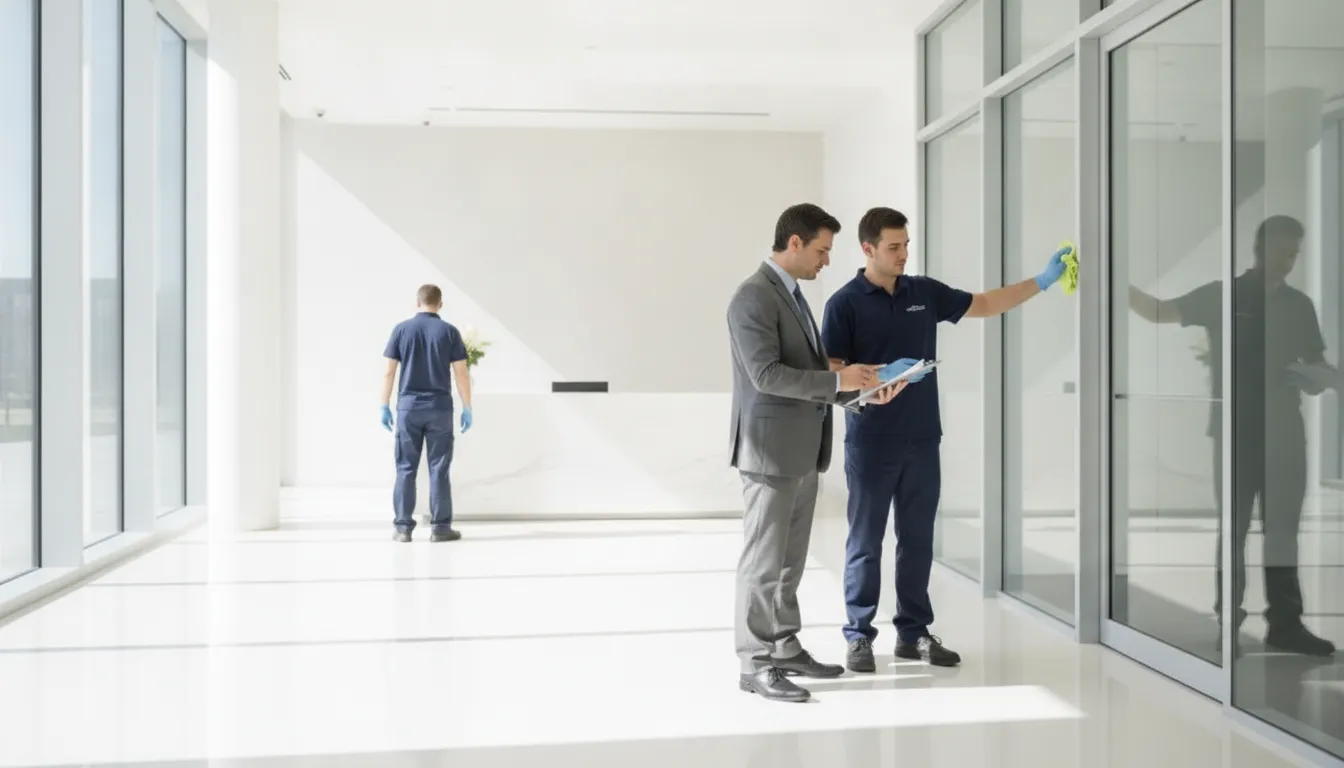
Commercial cleaning checklists help a facility manager turn "clean the building" into tasks a crew can finish, skip with a reason, or hand to maintenance. A useful list names the area, the action, the timing, and what to record when the work cannot be done. It is a planning tool. It is not a certificate, a health inspection, or proof that a surface is germ-free.
Call (801) 500-4747 to walk through the areas your checklist should cover, or request a free, scoped cleaning quote.
What should a commercial cleaning checklist do?
A checklist earns its place when two people can read the same line and agree on the work. A vague lobby line can mean dusting, glass, floors, or trash, depending on who is working that night. A better line names the reception counter and the door pulls, so the surface and the action are both clear.
Use the list for four jobs:
- Show which tasks belong in the routine and which are periodic.
- Give the crew a place to mark work that was blocked, such as a locked room or a wet floor that needs drying time.
- Give a supervisor a short way to spot missed areas without rewriting the scope.
- Give you a record you can compare with the proposal when the building changes.
Keep the list separate from a contract. Janitor Utah provides customized recurring commercial and janitorial cleaning, from once a day to once a month, and the task list for a site is set in a quote. A published template cannot tell you the price, the crew size, or the product set for your building. The commercial cleaning service page describes the general offer. Your checklist should describe the work you want that offer to cover.
Also keep the list separate from a result you cannot verify from a checkbox. Marking a line complete means the named task was done. It does not mean the room meets a code, a certification, or a measured reduction in illness. If a regulator, landlord, or infection-control lead needs a specific standard, put that requirement in the scope conversation and keep the checklist as the working task list.
How do you group tasks before you write lines?
Start with the building, not with a generic form. Walk the site, or use a recent floor plan, and list the spaces people actually use: entries, lobbies, work areas, break rooms, restrooms, corridors, elevators, stairs, storage, and any production or clinical rooms. Note hours, locked zones, and who must approve entry.
Then sort the work into groups. A single flat list of eighty lines is hard to train and easy to ignore. These six groups cover most commercial buildings. They also keep the document from turning into a manual.
| Task group. | What the lines should name. | What to leave for another document. |
|---|---|---|
| Daily. | Trash, obvious soil, entry glass, and occupied work surfaces used that day. | A promise that every surface is disinfected on every visit. |
| Periodic. | High dust, interior glass above reach, vents you can access, and scheduled detail work. | A fixed calendar copied from another building. |
| High-touch. | Door hardware, switches, rails, shared equipment, and reception counters. | A claim that cleaning those points makes the building germ-free. |
| Restroom. | A pointer to the restroom list and the supply check for that room. | Fixture-by-fixture steps already covered in a restroom checklist. |
| Floor. | Surface type, soil, and whether the task is spot clean, vacuum, or a scheduled floor-care visit. | A product recipe or a price for stripping and refinishing. |
| Facility-specific. | Clinic rooms, warehouse aisles, retail floors, daycare rooms, or other uses that change the sequence. | A one-size program pasted onto every site. |
The ISSA, a cleaning-industry association, describes a cleaning plan as something built around the facility: procedures, products, and a schedule, with extra attention on high-traffic and high-touch areas. That is a planning idea, not a score you can claim after one visit. Read their overview of environmental cleaning practices if you want the association's framing, then write lines that match your own rooms.
What belongs on the daily list?
Daily lines should be short enough to finish on the scheduled visit and specific enough that a substitute can follow them. Good daily lines name a place and a visible result:
- Empty and reline trash at named stations.
- Spot-clean entry glass and the reception counter.
- Remove visible debris from the main path of travel.
- Check that restroom dispensers on the route are not empty, and record a miss if product is out.
- Note spills, leaks, or damage instead of treating them as routine soil.
Do not load the daily list with work that needs a different crew, a different chemical dwell time, or a closed area. Periodic glass, floor finish work, and construction dust are easier to manage as their own lines with their own timing. If everything is marked daily, the list stops matching the visit and people stop using it.
Frequency still depends on traffic, hours, and the surfaces in the building. A checklist can say "each scheduled visit" without pretending every office needs the same calendar. When you are choosing how often those visits should happen, use a cadence discussion rather than hiding the decision inside a task line. The guide on how often commercial buildings should be cleaned covers the factors that change a schedule. The checklist should assume that schedule and describe the work inside it.
How should periodic work be listed?
Periodic tasks are the work that keeps a building from looking tired between daily visits. They are also the tasks most often left off a proposal because nobody named them.
Write each periodic line with a trigger, not only a wish:
- The area, such as lobby clerestory glass or the top of break-room cabinets.
- The condition that makes it due, such as visible dust, a monthly rotation, or after a remodel.
- The access needed, such as a ladder, a closed lobby, or a key from security.
- Who reports a problem the cleaner should not repair, such as a stained ceiling tile or a loose rail.
Keep periodic lines out of the daily block so a supervisor can see whether the rotation is actually happening. A line that says "detail clean as needed" gives no one a way to check it. Use a checkable line instead. "Dust the top of the filing cabinets in suite 200 on the monthly rotation." That line can be marked done, skipped, or moved.
If the building adds a new wing or a night shift, revisit the periodic group before you add headcount. Extra space and extra hours change which lines are realistic. Staffing math belongs in a staffing plan, not in the checklist itself. The commercial cleaning staffing plan article is the place to scope coverage once the task groups are clear.
Which high-touch points should you name?
High-touch lines fail when they say "sanitize all touch points." That phrase hides the count. Walk the route and name the points people share:
- Entry door pulls and push plates.
- Elevator buttons and interior rails.
- Stair handrails.
- Light switches in shared rooms.
- Break-room faucet handles, refrigerator grips, and microwave doors.
- Shared conference-table edges and chair arms, if those rooms are on the route.
- Reception counters and visitor pens or clipboards, if the site wants them included.
Say what the worker does: wipe with the product the site has approved, and leave the surface ready for the next user according to that product's label. Do not write "kills all germs" or "CDC compliant" on the checklist. Product choice and label directions belong in the supply plan and the quote. The article on commercial cleaning supplies is where to sort daily materials from specialty items.
High-touch work can sit on the daily visit in a busy lobby and on a lighter cadence in a low-traffic corridor. Note the cadence on the line. If a clinic or daycare wants a tighter routine in certain rooms, put those rooms in the facility-specific group so the general office list does not pretend to cover them.
How do restroom and floor groups fit the master list?
Restrooms and floors are large enough to deserve their own lists. The master commercial checklist should point to them, not copy every fixture and every floor finish.
For restrooms, the master line can say which rooms are in scope, whether dispensers are checked on each visit, and where exceptions are logged. The fixture sequence, floor type inside the room, and final look of that room belong on a restroom checklist. Janitor Utah's commercial restroom cleaning checklist is written for that narrower job. Use it when you build the restroom attachment, and keep this framework focused on how the restroom group connects to the rest of the building.
For floors, name the surface and the kind of soil before you name a machine. Carpet in a quiet office, sealed concrete in a warehouse aisle, and hard floors at an entry take different work. One master line can call for vacuuming the open office carpet on each visit. A second line can call for spot-mopping entry hard floors when wet soil is tracked in. Leave machine choice, finish work, and any price for a walkthrough. Janitor Utah does offer floor and carpet care as part of a quoted scope. The checklist should say which floors are included and which conditions are exceptions, such as paint, construction dust, or a spill that needs more than a spot clean.
How do you adapt the list by facility?
The same six groups can serve an office, a clinic, a warehouse, a store, or a daycare, but the facility-specific group should change. Do not publish one list and rename the header.
Offices and professional suites
Prioritize entries, restrooms, break rooms, and the desks or conference rooms that are actually on the route. Many offices do not want papers moved. Write that limit on the line: dust open surfaces and do not relocate documents. After-hours access, alarm codes, and which suites are vacant this month belong in the notes, because they change which rooms can be checked.
Clinics and other medical offices
Ask which rooms the cleaning crew may enter and which are handled by clinical staff. A checklist can include waiting rooms, restrooms, and approved floors. It should not claim a medical certification or an infection-control credential. If the practice has its own room-turnover rules, attach those rules and do not invent a second clinical protocol in the janitorial list.
Warehouses and industrial sites
Name aisles, restrooms, offices, and break areas separately from production zones. A cleaning crew should not be sent into active equipment without the site's own safety rules. Dust, pallet debris, and dock entries are common checklist items. Production cleaning done by plant staff is a different job and should stay off this list unless the quote says otherwise.
Retail and daycare
Retail lists usually follow customer hours and floor presentation. Daycare lists follow room access, nap times, and toys or surfaces the center wants included. Link the facility-specific group to the service that matches the building, such as janitorial cleaning, childcare cleaning, or industrial cleaning, and then write only the tasks that site approved.
Construction dust and a final builder clean are not routine janitorial lines. If the building is still in a build-out, use a construction scope instead of forcing daily office lines onto drywall dust. The construction cleaning service is the right place to start that conversation.
How should each line be worded?
Write lines a substitute can finish on the first night. A reliable line has five parts:
- Action verb: empty, wipe, vacuum, spot-mop, dust, restock, or report.
- Object and place: lobby trash station, suite 200 door pulls, warehouse restroom dispensers.
- Timing: each visit, weekly rotation, or after a named event.
- Limit: do not move papers, do not enter locked clinics, stop if the floor is being refinished.
- Exception: mark blocked, out of product, or needs maintenance, and say where that note goes.
Avoid lines that only a longtime employee understands. "Do the usual lobby" is one example. Avoid lines that guarantee an outcome. "Leave the room sanitized and compliant" is another. If a product label requires a wet contact time, the supply plan and training should say so. The checklist line should still be something a supervisor can observe. Either the named surface was wiped, or it was not, and the note says why.
Quality checks work better against this kind of line. A supervisor can sample a few lines per visit instead of debating whether the whole building "looks clean." How you review a vendor over time is a management topic. The article on consistent janitorial service quality covers follow-up. The checklist is the shared list those follow-ups refer to.
What should you hand a vendor before the quote?
A checklist is most useful when the quote is built from it. Before you ask for pricing, gather:
- A simple space list with approximate area or room counts, plus floors and finishes you know.
- Operating hours and the times a crew may work.
- The daily, periodic, high-touch, restroom, floor, and facility-specific groups, even if some lines are still drafts.
- Known exceptions: alarms, occupied night shifts, clinical rooms, food service that is out of scope, or areas you will clean in house.
- Who approves products, where supplies are stored, and whether you or the vendor buys consumables.
- How completed work and skipped work should be reported.
Do not send a competitor's form or a government contract as the specification unless you have decided those requirements apply to your building. A Utah commercial site usually needs a scoped walkthrough more than a copied checklist from another market. Janitor Utah can review the groups with you and propose a cadence. Price, crew, and product choices come back in the quote, not from this article.
Green products can be requested where they fit the task. Treat that as a preference to confirm during the quote. It is not a promise that every product on every visit will carry a specific label.
Which checklist mistakes create false confidence?
Several patterns show up when a list looks complete and still fails on the floor:
- One list for every building. A clinic waiting room and a warehouse dock do not share a sequence.
- Tasks with no place name. "Wipe counters" does not say which counters are in scope.
- Daily marks on work that is actually monthly. The crew learns to skip lines, and the record becomes noise.
- Certification language. A checkbox cannot prove compliance, bonding, insurance limits, or a pathogen result.
- No exception column. If a locked door has nowhere to be recorded, the missed room looks like a completed room.
- Copying a restroom or disinfection list into the master document. The master list gets long, and the detailed list stops being maintained.
If you already have a vendor, use the checklist as the document you both edit when the site changes. Adding a line without changing the visit length is how scopes quietly grow. Say which group the new line belongs to and whether it replaces another task.
Frequently asked questions
Are commercial cleaning checklists the same as a scope of work?
No. A checklist is the working task list. A scope of work also covers schedule, access, responsibilities, and price. Build the checklist first so the scope has something specific to quote.
How long should the master list be?
Long enough to name each task group and the exceptions, and short enough that a crew will mark it. Put restroom fixtures, floor-care steps, and supply orders in attachments instead of one endless page.
Can one checklist cover every Utah site a company owns?
Use one framework and a facility-specific group per site. Hours, finishes, and locked rooms differ even when the company is the same.
Does a completed checklist prove the building is germ-free?
No. It shows that named tasks were marked done or marked as exceptions. It is not a lab result, a certification, or a guarantee of fewer sick days.
What if we only need restrooms or floors cleaned?
Say that in the facility-specific group and do not force a full building list. Ask for a quote on the rooms and surfaces you actually want serviced.
Call (801) 500-4747 to talk through the building before a walkthrough, or send your space list and task groups for a scoped quote.
A commercial cleaning checklist works when it matches the rooms you have, the visits you can staff, and the exceptions you are willing to record. Bring that draft to the quote. Janitor Utah will use it to propose a scope, not to promise a result the list cannot measure.