
What Is Commercial Cleaning Services?
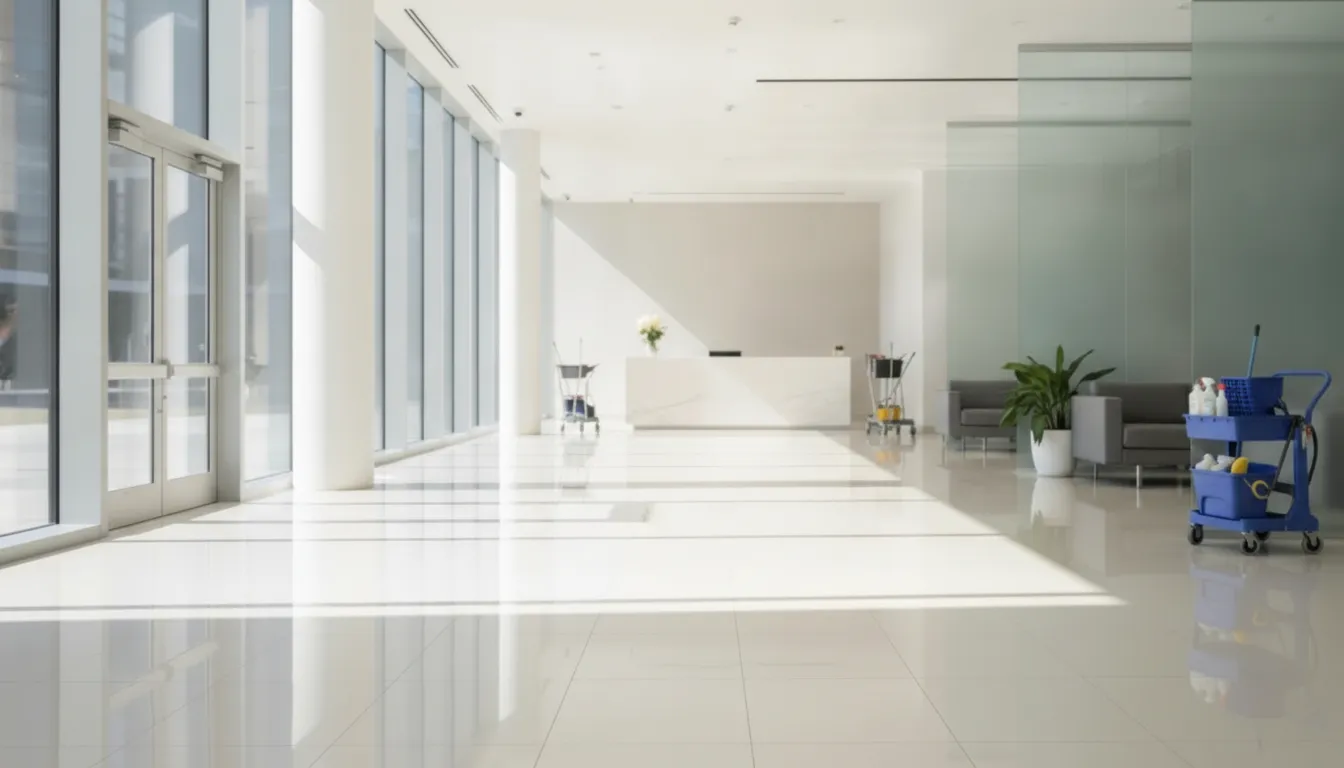
What is commercial cleaning services? It is professional cleaning planned for a business, institution, or other commercial building, not a home. The work can include everyday janitorial care, a one-time project, or a specialist job such as floor care, window care, or disinfection. A useful program names the spaces, the tasks, and how often each task happens. It is not a single package that every office, clinic, warehouse, or store receives.
Call (801) 500-4747 to talk through commercial cleaning options for your facility.
Janitor Utah is the public brand of Jani-Serv, Inc., a locally owned, non-franchise commercial cleaning company. We plan work around the building in front of us. Our commercial cleaning service starts from the facility type, not a fixed package. A quote uses the location, the area, the scope, and the cadence. This guide explains what the category can cover, how recurring care differs from project work, and which details shape that conversation.
What is commercial cleaning services for a business?
Commercial cleaning services are the cleaning tasks a contractor performs in a workplace so the people who run that workplace can stay focused on their own work. The setting might be a professional office, a medical or dental clinic, a school, a warehouse, a dealership, a store, or a restaurant. The building is used by employees, customers, patients, students, or tenants. Soil, trash, and high-touch surfaces return on a schedule the operator does not fully control.
That is the main split from residential cleaning. A home is one household. A commercial building has shared rooms, public hours, shifts, deliveries, and rules about who may enter which area. ISSA, the cleaning industry association, describes commercial cleaning as professional service for businesses, institutions, and commercial buildings. Including routine janitorial work, floor care, and specialty jobs such as window washing and post-construction cleanup. Programs are adjusted to the building and to how it is used.
The phrase itself is broad on purpose. "Commercial cleaning services" can mean the whole category, or it can mean one visit. A buyer who asks only for "office cleaning" may mean nightly trash and restrooms. Another buyer may mean a final cleanup after a remodel. Both requests belong in the category. They are not the same job, and they should not be quoted as if they were.
At Janitor Utah, the public offer is customized recurring commercial and janitorial cleaning, from once a day to once a month, plus adjacent work the site actually markets. That adjacent work includes industrial and warehouse cleaning, cleaning during a build and final construction cleanup. Disinfection, floor and carpet care, windows, pressure washing, and supply restocking for existing cleaning clients. A named capability is a conversation, not a published package and not a price.
Which tasks can a commercial cleaning service include?
Most recurring programs start with the rooms people share. Typical tasks include emptying trash, dusting reachable surfaces, vacuuming or mopping floors, wiping agreed surfaces. Cleaning restrooms, and restocking soap and paper goods when that restocking is part of the scope. Those tasks keep a workplace presentable between deeper visits. They do not, by themselves, strip a floor, wash exterior glass, or remove construction dust.
Specialist and project work sits beside that routine. It is scoped on its own because the surfaces, access, and timing are different.
- Office and janitorial care. Recurring attention for offices and shared building areas. The plan lists the rooms, the tasks, and the cadence.
- Construction cleanup. Cleaning while a commercial build is underway, or a final cleanup when the project is complete. Dust, debris, glass, carpet, and fixtures are discussed by area.
- Industrial and warehouse cleaning. Plants, distribution space, and the offices attached to them. Access limits and site restrictions belong in the brief.
- Carpet and floor care. Carpet areas and hard or retail floors, discussed from visible condition, material, traffic, and when the floor can be reached.
- Window cleaning. Commercial glass care. Janitor Utah uses reverse-osmosis systems and treats window work as its own scope.
- High dusting. Elevated ledges and surfaces, only where access is safe to discuss.
- Disinfection and deep cleaning. Sanitation, disinfection, electrostatic disinfecting, and deeper cleaning, shaped by the surfaces and how the space is used.
- Supply management. Toiletries and supplies for existing cleaning clients, not a separate retail order.
You can compare those lines on the commercial cleaning services overview. The task list for your building comes from the areas you name, not from a menu that is identical for every client. Green-leaning products are used whenever possible. That is a preference we can discuss, not a promise that every product on every job is certified green.
How do recurring visits differ from project work?
Recurring commercial cleaning is the steady route. It might be daily, several times a week, weekly, or as infrequent as once a month. The point is to reset the spaces that get used: entries, restrooms, break areas, workstations, and corridors. Office and janitorial cleaning is the page for that conversation. Bring the offices and shared areas, how often you want cleaning, and any access or product notes.
Project work answers a different question. Something has changed, or a surface needs a method the nightly route does not include. A remodel produces dust that a damp mop will not finish. A carpet collects spots along a busy path. Interior glass clouds. A floor finish wears through. Those jobs are scheduled around the condition and the access window, then they end. They can sit next to a recurring plan, but they are quoted as their own scope.
Construction cleanup is the clearest example. Commercial construction cleanup can happen while the build is underway or after the project is complete. A starting list may include surface dust and debris, window cleaning, carpet vacuuming and spot cleaning, damp mopping, restroom and break-area fixtures, and light fixtures. Floor stripping, waxing, buffing, or pressure washing is added only if the quote says so.
An older Janitor Utah article draws a line between janitorial upkeep and deeper commercial projects. The labels still overlap in everyday speech. For a quote, the useful split is simpler: work that repeats on a cadence, and work that is scoped once for a surface, a phase, or a condition. If you want help deciding how often the repeating work should happen, the planning guide on how often commercial buildings should be cleaned stays on that question. This page does not.
What does the service look like in different facilities?
The category name stays the same. The building does not. Janitor Utah's priority facilities are medical and dental clinics, corporate and professional offices, industrial and warehouse sites, retail, and daycare. Financial institutions, resorts, and gyms are secondary. We do not sell church cleaning or commercial kitchen hood and exhaust cleaning.
Offices and shared workplaces
An office program usually starts with reception, work areas, meeting rooms, break space, restrooms, and the paths between them. A single suite and a multi-tenant building are both commercial, but the access rules differ. In a multi-tenant property, say whether the request covers common areas only or specific suites, and who can approve entry after hours.
Medical and dental settings
Medical and dental cleaning is a facility conversation, not a claim of clinical certification. Tell us which rooms are in scope, which surfaces the practice wants included, and any product rules the facility already uses. We do not claim a guaranteed pathogen kill, a germ-free result, or fewer sick days as a measured outcome.
Schools, daycare, and customer-facing sites
Schools, daycare rooms, dealerships, stores, and restaurants share one planning habit: the public schedule drives the cleaning window. A showroom floor, a classroom, and a dining room collect different soil, and each has hours when a crew would interrupt the business. Name the customer-facing areas separately from back-of-house rooms.
Industrial and warehouse buildings
Industrial and warehouse cleaning covers plants, warehouses, and distribution premises, and it can include the offices on the same site. Describe each zone. A travel aisle, a dock, and an attached office are not one task. Share site restrictions before anyone assigns work in an active area. Cleanroom class ratings are not part of this offer unless a current qualification is in hand, and we do not claim one.
Which facility details shape a quote?
A commercial cleaning quote is a scope, not a rate card. Janitor Utah does not publish hourly rates or a fixed online price. The request asks for the facts that change the work. A short, complete brief is more useful than a square-foot number alone.
| Detail to share | Why it changes the scope | Example to include |
|---|---|---|
| Facility type. | It sets the rooms, the soil, and the product questions. | A dental clinic, a warehouse with offices, or a retail shop. |
| Location. | It confirms whether the site fits the service focus. | The city and county, plus the site address. |
| Area and zones. | It stops a lobby-only job from being quoted like a full building. | Suites, restrooms, the shop floor, or common corridors. |
| Scope of work. | It separates the nightly route from one-time tasks. | Restrooms and trash weekly. Carpet care stays a project. |
| Cadence and timing. | It matches visits to hours when the crew can work. | Three evenings a week, after 6 p.m. |
| Access and surfaces. | It flags locks, alarms, finishes, and restricted zones. | The key procedure, the floor material, and any product limits. |
Our commercial cleaning focus includes Salt Lake, Utah, Davis, Summit, and Tooele counties. Construction cleaning is discussed for Salt Lake City, Davis County, and Utah County. Sharing the address is how we tell whether a site fits. A request does not confirm an appointment. We follow up to talk through the site and the next step.
Have green-cleaning preferences, or a product the facility already requires? Bring that to the conversation. For medical or dental spaces, also bring any care instructions for the finishes. For a build, say whether work is still underway or the project is ready for a final clean. For a warehouse, include access limits. Those notes keep specialist work, such as disinfection and deep cleaning or window cleaning, from being guessed into a recurring visit.
How should you read a commercial cleaning scope?
Read the scope as a list of places and outcomes, not as a slogan. "Full service" does not say whether supply restocking is included. It also does not say whether high dusting is in bounds, or whether floor finishing is a separate visit. Ask for the rooms, the tasks in each room, and what is outside the visit.
Three checks keep the reading honest.
- Match tasks to zones. Restrooms, entries, offices, production paths, and glass should not share one vague line if they need different work.
- Separate the cadence from the project. Weekly janitorial care and a one-time floor or post-construction clean can be purchased together, but they are different lines.
- Name what you will judge. Agree on a simple picture of "ready for use" in the rooms that matter, such as waste removed and the entrance path orderly before opening. Save a written checklist system for the commercial cleaning checklists guide.
Quality, over time, comes from that written scope plus a person you can contact when a room is missed or the building changes. It does not come from a guarantee that every surface will be perfect after one visit. If you later need to compare companies, use how to choose a commercial cleaning company. If the open question is price, use commercial cleaning service pricing. Neither topic is the job of a definition.
Janitor Utah's working commitments are practical: a clear conversation, respect for the people using the building, and agreement on the scope and who to contact. We are not a franchise. We do not ask you to book a fixed-price clean online. The next step is a scoped quote built from the facility you describe.
Frequently asked questions
What is included in commercial cleaning services?
It depends on the scope you agree to. Recurring work often covers trash, surfaces, floors, and restrooms in the areas you name. Project work, such as construction cleanup, carpet and floor care, windows, high dusting, or disinfection, is added when that work is written into the quote.
Is commercial cleaning the same as janitorial service?
People use the words interchangeably. Janitorial service usually means the repeating route. Commercial cleaning is the broader category, and it also covers projects and specialist work. For a quote, list the tasks and the cadence instead of relying on either label alone.
How often can commercial cleaning be scheduled?
Janitor Utah discusses recurring cleaning from once a day to once a month. The right interval depends on how the facility is used. Project work is scheduled around the job, not forced into the same cadence as the nightly route.
Do commercial cleaning services publish a standard price?
We do not publish a rate card. Price follows the facility type, location, area, scope, and cadence. A request starts a conversation. It is not an instant booking and it does not lock a price.
Which Utah facilities can start a commercial cleaning conversation?
Offices, medical and dental clinics, schools, industrial and warehouse sites, dealerships, retail, and restaurants can all be discussed. Our focus counties are Salt Lake, Utah, Davis, Summit, and Tooele. Share the site address so we can confirm the fit.
Tell us the facility type, location, area, scope, and cadence. We will follow up about a walkthrough and a scoped quote. Call (801) 500-4747, email , or use the form on our contact page.